
Camino Francés: 33 stages from Saint-Jean-Pied-de-Port to Santiago
The Camino Francés is the most walked route to Santiago de Compostela: about 242,000 pilgrims received the Compostela after walking it in 2025. It starts in Saint-Jean-Pied-de-Port, at the foot of the French Pyrenees, and crosses Navarre, La Rioja, Castile and León and Galicia to the cathedral in Santiago. The usual guide figure is 764 km in 33 stages, so plan on about five weeks. Day 1 is the hardest climb of the whole walk, over the Pyrenees to Roncesvalles. After that come vineyards, the long, open meseta, the mountains of León and Bierzo, and green, rainy Galicia, with a bed in almost every village. Here is what to expect, from the winter closure of the Napoleon route to pilgrim menus, summer heat and visas.
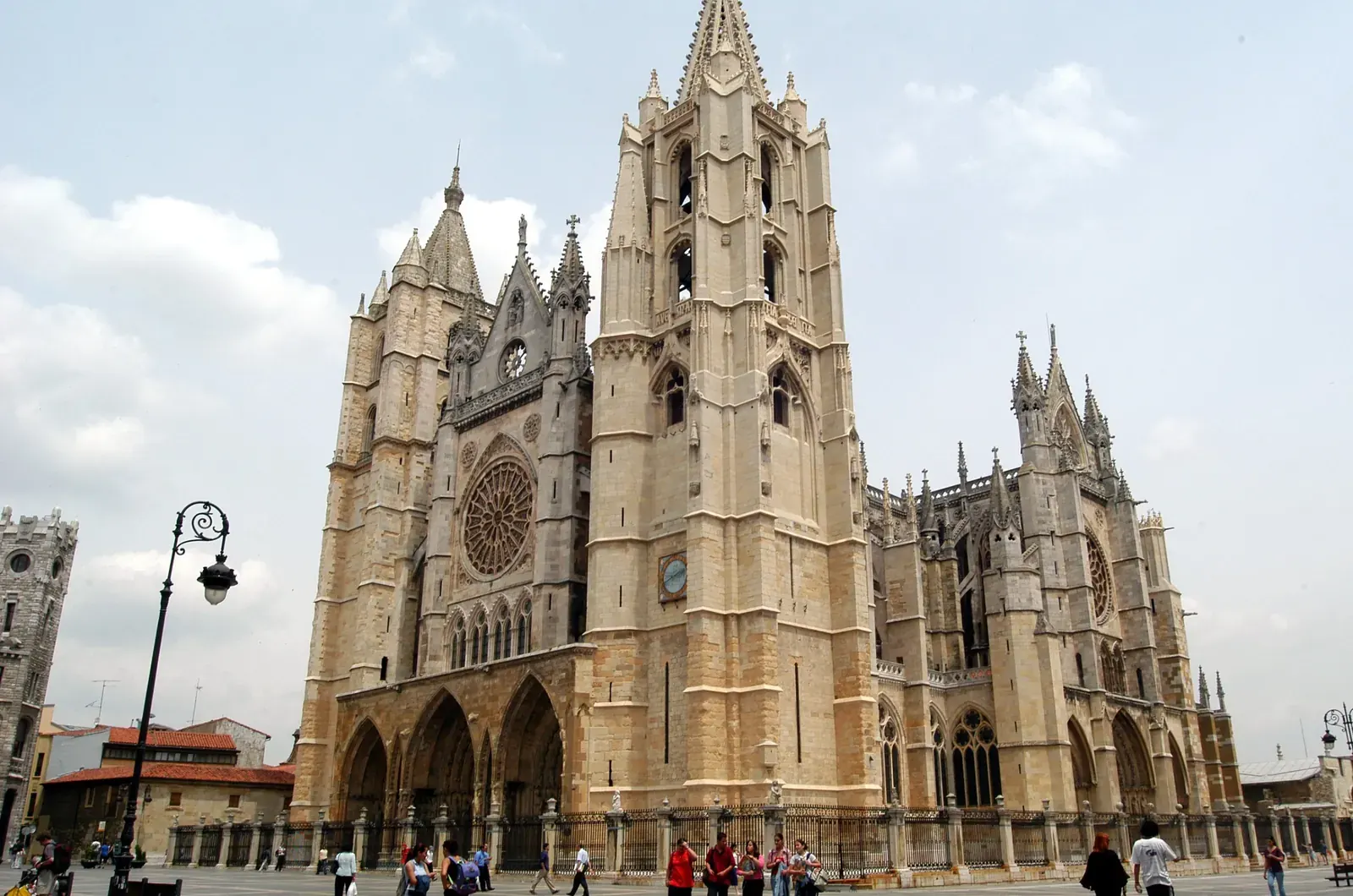
- High point
- 1,505 m · Monte Irago, past the Cruz de Ferro
- Duration
- 33–35 days
- Best months
- Apr–Jun, Sep–Oct
- Difficulty
- Hard, non-technical
- Guide
- Not required
For guidance only. Check details with your operator and the official sources listed at the end before you book.
Where to book and compare Camino Francés trips
Booking sites · affiliate linksEach site lists trips from several operators. Compare dates, group sizes, what is included and reviews there; we don't rank operators.
We earn a commission if you book through these links, at no extra cost to you. Prices and availability are on each site.
On this page
Which route should you choose?
The Camino Francés is part of the UNESCO World Heritage site "Routes of Santiago de Compostela", listed in 1993 and extended to the northern routes in 2015. It is the most walked of all the Caminos: about 242,000 of the 531,000 Compostelas given in 2025 went to pilgrims on this route.
There are two ways over the Pyrenees on day 1. The Napoleon route climbs from Saint-Jean (172 m) to the Col de Lepoeder (1,430 m) and down to Roncesvalles (945 m). It is open from 1 April to 31 October, weather permitting. From 1 November to 31 March, the Navarre authorities close it on the Spanish side. Then you must take the Valcarlos route. It is about 23.4 km long and follows the valley near the road, then climbs through beech woods to the Alto de Ibañeta and Roncesvalles. The closure began in winter 2015 to 2016 after many rescues, and Navarre can charge rescue costs to anyone who ignores it.
2027 is a Holy Year in Santiago. The Holy Door opens on 31 December 2026, and more pilgrims are expected through 2027, especially in Holy Week (21 to 28 March) and in mid to late July. Book beds earlier and allow extra time for the Compostela queue.
| Route | Days | Scenery | Crowds | Acclimatisation |
|---|---|---|---|---|
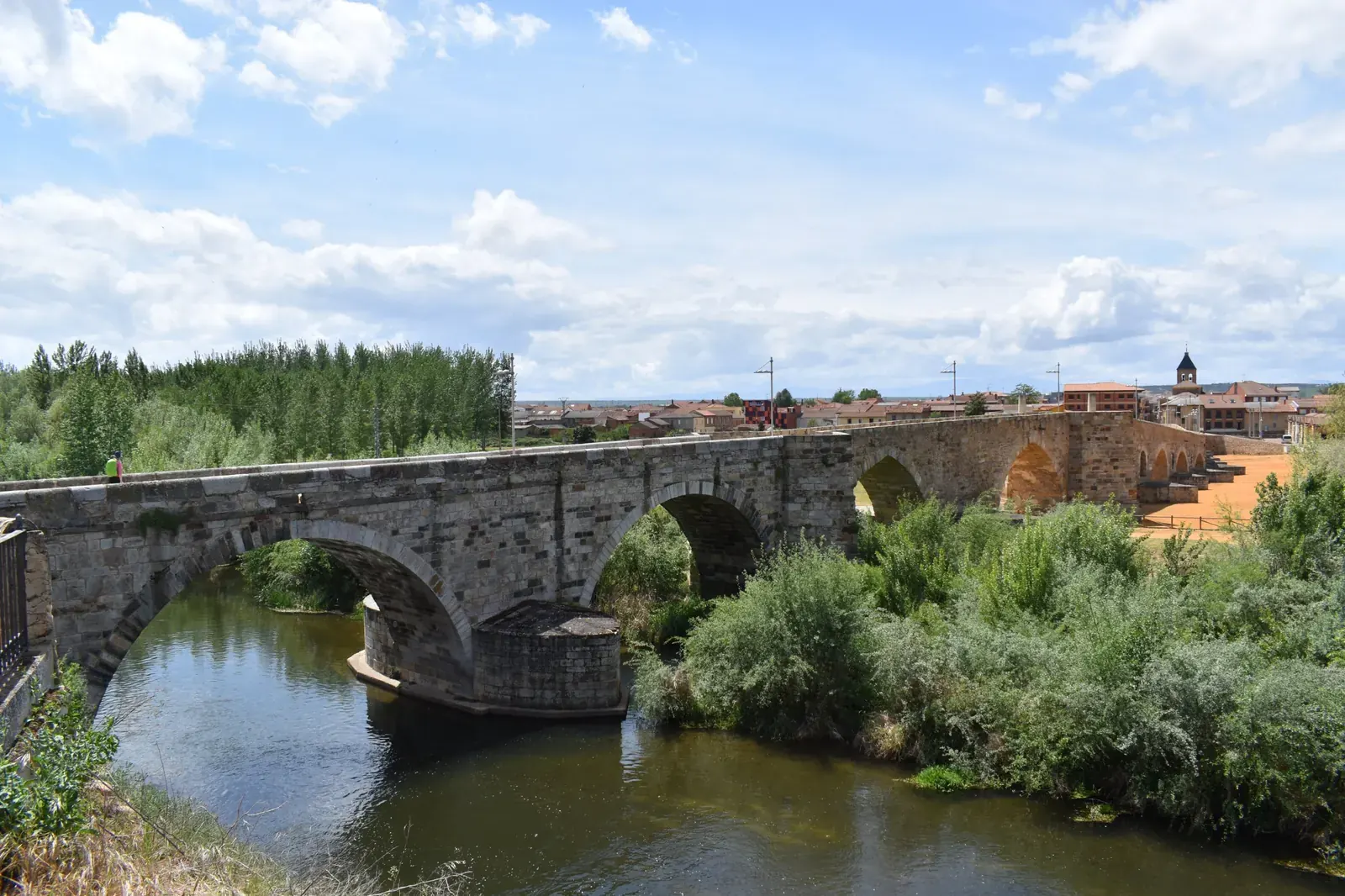
| The full route from Saint-Jean-Pied-de-Port, about five weeks itinerary belowAll 33 stages, about 764 km by the stage figures of the Gronze guide. You cross the Pyrenees on day 1, either over the Col de Lepoeder (Napoleon route, 1 April to 31 October) or through Valcarlos. Add a rest day or two in Pamplona, Burgos or León if you need one. Book Roncesvalles ahead from May to September. | 33–35 | Excellent | Medium | Very good |
| From León or Ponferrada, in about two weeksFrom León, 13 stages and about 305 km to Santiago, by our sum of the Gronze stage figures; it skips the meseta but keeps Astorga, the Cruz de Ferro, Bierzo and the climb to O Cebreiro. From Ponferrada, 9 stages and about 204 km, starting after the high point. Both earn the Compostela. From León you need about two weeks; from Ponferrada you have a few days to spare. | 9–14 | Excellent | Medium | Very good |
| From Sarria, the last five stagesFive stages, about 114 km by the Gronze figures: the shortest walk that earns the Compostela, and the busiest section. About a third of all pilgrims started in Sarria in 2025. We walked the last section from Sarria in late June 2025; see our Sarria page for the stage-by-stage details. | 5 | Very good | High | Very good |
6-day The full route from Saint-Jean-Pied-de-Port, about five weeks itinerary at a glance
The itinerary below groups the 33 stages of the full route into six sections; day numbers are the stage numbers of the Gronze guide. Pyrenees and Navarre (days 1 to 6, about 133 km): the big climb to Roncesvalles, then Zubiri, Pamplona, the Alto del Perdón (770 m), Puente la Reina and Estella. La Rioja (days 7 to 9, about 77 km): vineyards, Logroño, Nájera and Santo Domingo de la Calzada. Burgos and the meseta (days 10 to 20, about 250 km): the hills to Burgos, then the high, open plain through Castrojeriz, Frómista, Carrión de los Condes and Sahagún to León, at roughly 800 m to 900 m.
León and the mountains (days 21 to 24, about 101 km): Hospital de Órbigo, Astorga and Rabanal, then the climb past Foncebadón to the Cruz de Ferro and the high point just beyond it, and a long descent to Ponferrada. Bierzo and the climb into Galicia (days 25 and 26, about 51 km): Villafranca del Bierzo, then a steep climb to O Cebreiro (about 1,300 m). Galicia (days 27 to 33, about 153 km): over the Alto do Poio (1,335 m) to Triacastela and Sarria, then Portomarín, Palas de Rei, Arzúa and O Pedrouzo to Santiago.
Stages run from about 17.8 km to 28.5 km. Most villages have an albergue, so you can split a long stage or add a rest day. Variants exist after León (via Villar de Mazarife) and after Triacastela (via the monastery of Samos, about 7 km longer).
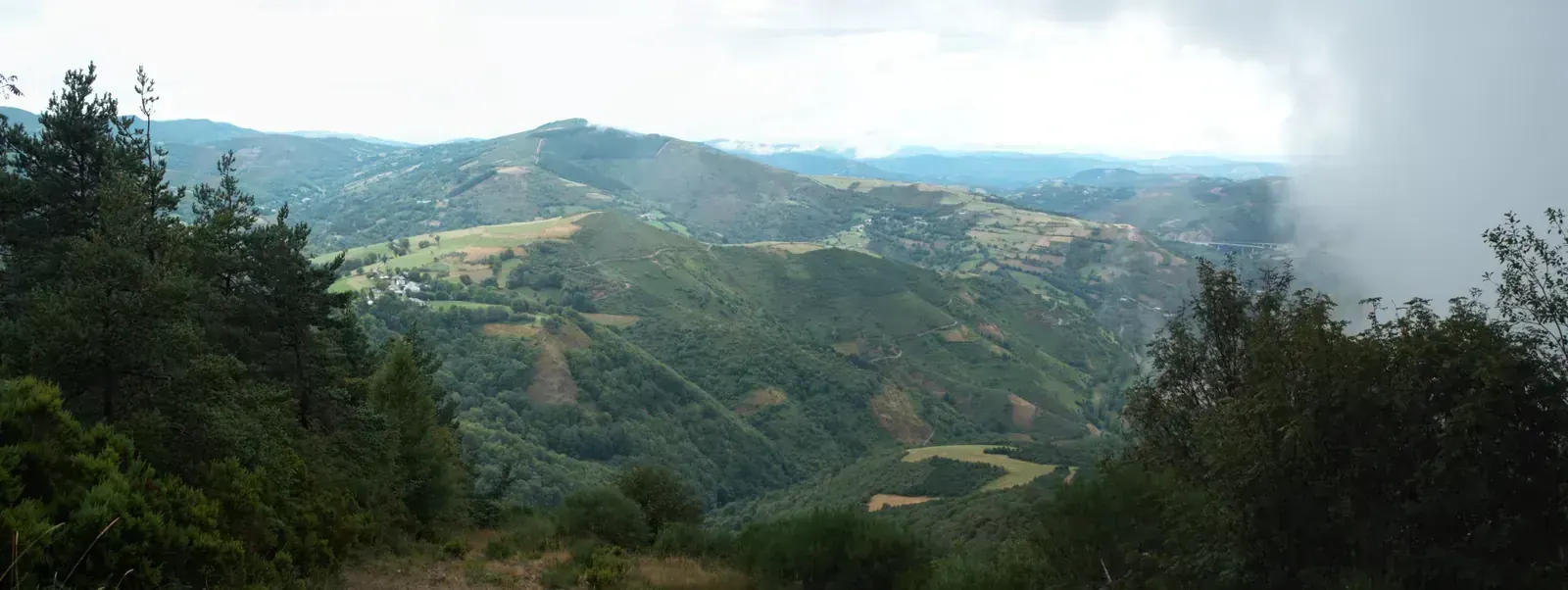
- Day 1 Saint-Jean-Pied-de-Port Los Arcos (Pyrenees and Navarre) via Col de Lepoeder (Napoleon route) 1,430 mnight at 444 m
- Day 7 Santo Domingo de la Calzada (La Rioja) night at 641 m
- Day 10 León (Burgos and the meseta) night at 837 m
- Day 21 Ponferrada (León and the mountains) via Monte Irago, past the Cruz de Ferro 1,505 mnight at 544 m
- Day 25 O Cebreiro (Bierzo and the climb into Galicia) night at 1,300 m
- Day 27 Santiago de Compostela (Galicia) via Alto do Poio 1,335 mnight at 260 m
What it really costs
No permit is needed. Your main costs are beds and food for about five weeks, getting to Saint-Jean and home again, and a visa if your passport needs one. Here is what to plan around in 2026.
Insurance that covers Camino Francés
Take a travel policy with medical cover for the whole trip, including walking. Unless you hold a European health card (EHIC), a doctor or a hospital visit in Spain or France is billed to you. Blisters, sore tendons and heat are common problems on a five-week walk. If you apply for a Schengen visa, check that the policy meets the visa rules. Navarre can charge rescue costs to anyone who walks the Napoleon route while it is closed. In an emergency call 112.
Staying connected in Spain
You can buy a Spanish SIM or eSIM on arrival; registration needs your passport. Day 1 starts in France, so check your roaming for the first hours. The AlertCops app from Spain's Interior Ministry has an SOS button and can share your location; it is worth installing before you start.
Getting there and where to stay
Saint-Jean-Pied-de-Port is in the French Basque Country. Most pilgrims reach it by the regional train from Bayonne; many fly into Biarritz (BIQ) and continue via Bayonne, so check connections for your dates. At the end, Santiago has its own airport and trains to Madrid.
Getting there by air
Bayonne to Saint-Jean-Pied-de-Port by train
A night in Saint-Jean before you start
Gear: rent or buy
You carry everything for five weeks, so pack light. Nights in albergues need your own sleeping bag (the Roncesvalles albergue asks for one). On the meseta in July and August, the afternoons are hot with little shade; in Galicia, expect rain at any time of year. Mornings at 800 m and above are cool even in summer.
- Worn-in walking shoes or light boots, plus sandals for the eveningBuy
- Backpack of 30–40 litres with a rain coverRent or buy
- Light sleeping bag for albergue dormsBuy
- Wide sun hat, sunglasses and high-factor sunscreen for the mesetaBuy
- Waterproof jacket or poncho for the Pyrenees and GaliciaBuy
- Warm layer for cold mornings and the high passesBuy
- Blister kit, first-aid kit and a headlamp for dark startsBuy
- Water bottles for at least two litresBuy
- Trekking poles for the descents from Lepoeder and the Cruz de FerroRent or buy
- Earplugs, quick-dry towel, power bank and some cashBuy
Add a few days in Spain
The Camino Francés passes through several cities where a rest day is easy, and Santiago is a good base at the end.
A rest day in Pamplona
A rest day in Burgos or León
Galicia by train after Santiago
Frequently asked questions
How hard is the Camino Francés?
There is no technical ground, but it is long: 33 stages of about 17.8 km to 28.5 km, day after day, for about five weeks. Day 1 rises about 1,260 m over the Pyrenees, and there are later climbs to the Cruz de Ferro and O Cebreiro. Blisters, sore tendons and heat are common problems, so start with shorter days and rest when you need to.
Do I need a permit or a guide?
No permit and no guide. The route is waymarked with yellow arrows and scallop shells, and in Galicia granite milestones show the distance left to Santiago. You need a credencial (pilgrim passport), stamped along the way, to sleep in pilgrim albergues and to get the Compostela.
How do I get the Compostela?
Walk at least the last 100 km to the cathedral with a stamped credencial; in the last 100 km, get two dated stamps a day, at the start and end of each stage. Stamps come from albergues, parishes, cafés and hotels. Register online and collect it at the Pilgrim's Office, Rúa Carretas 33, open daily 10:00 to 19:00 (closed on 25 December and 1 January). The Compostela is free and is given for religious or spiritual reasons; anyone can ask for the certificate of distance (€3). In busy periods, same-day collection is not guaranteed.
Where do I sleep, and do I need to book?
In albergues (dorms), pensions or hotels; almost every village has one. Book Roncesvalles ahead: the albergue says a booking is practically required from May to September. Galicia's public albergues take no bookings: beds go to the first people who arrive, from 13:00. Private albergues, pensions and hotels can be booked. In the 2027 Holy Year, book earlier than usual.
Can I walk the Napoleon route over the Pyrenees in winter?
No. From 1 November to 31 March, the route over the Col de Lepoeder is closed on the Spanish side, and you must take the Valcarlos route instead, about 23.4 km. Navarre can charge rescue costs to anyone who ignores the closure. From 1 April to 31 October it is open, weather permitting.
What about food, dietary needs and faith on the Camino?
No albergue on the route states that it serves halal food, and pork is common: chorizo, ham, lacón, and Galician broth (caldo) is traditionally made with pork fat, so check before you order if you avoid pork or eat vegetarian. Fish, octopus, eggs (tortilla), vegetables, bread and cheese are easy to find. Ask "sin cerdo" (no pork), and ask whether the broth or beans contain pork or chorizo and whether wine is used. Vegan and kosher food is not something to expect in albergues and village bars: bring what you need, and explain any allergy clearly when you order.
There are mosques or Islamic communities in Pamplona, Burgos and Santiago (Rúa Penedo 1), and in Sarria and Melide. If you pray during the day, a qibla app and a light mat let you do so on the trail; churches are not prayer rooms.
Which languages do guides speak?
Albergue and hotel staff speak Spanish, and English is common on the busy stages. If you book through an operator, ask before you pay about a guide or contact who speaks another language, such as Arabic or French.
Should I tip?
Tipping is not expected in Spain. Leaving small change or rounding up is welcome if the service was good.
Which visa do I need?
It depends on your passport: check the rules for your nationality with the Spanish consulate or its visa centre where you live. Some passports need no visa for stays of up to 90 days in any 180; others need a Schengen visa (€90 for adults), applied for at that consulate or visa centre. Among Gulf passports, for example, UAE citizens need no visa, while Saudi, Qatari, Kuwaiti, Bahraini and Omani citizens do; they can get a five-year multiple-entry visa on their first application, and the EU began a review of visa-free travel for these five countries in October 2026, but nothing has changed yet. Since April 2026, the Entry/Exit System takes your fingerprints and photo on first entry. ETIAS, a travel authorisation for visa-free visitors, is not running yet and has no official start date.
When is the best time to go?
April to June and September to October. The Napoleon route is open from April, and the meseta is not yet hot. July and August bring hot, shadeless afternoons on the meseta. September was the busiest month in 2025. From November to March the Napoleon route is closed, and Spain's Guardia Civil advises against walking the mountain sections without winter experience.
Is it safe?
It is a busy, well-marked route. The main risks are weather on the Pyrenees, heat on the meseta, and traffic where the path follows or crosses roads. Walk in daylight, carry your passport and water, and tell family where you are each day. In an emergency call 112; the Guardia Civil is on 062, and the AlertCops app has an SOS button.
Sources and last check
- Gronze: Camino Francés, 33 stages and stage distances (checked 6 Nov 2026)
- Gronze: stage 1A Saint-Jean to Roncesvalles, Orisson prices, winter Valcarlos rule (checked 6 Nov 2026)
- Gronze: stage 24 Foncebadón to Ponferrada, high point 1,505 m (checked 6 Nov 2026)
- Gronze: getting home from Santiago, bus 6A, trains, Galicia Rail Pass (checked 6 Nov 2026)
- pilgrim.es: stage 1, Col de Lepoeder 1,430 m and Roncesvalles 945 m (checked 6 Nov 2026)
- Wikipedia (IPFS mirror): French Way, about 769 km, high point 1,515 m near Manjarín (checked 6 Nov 2026)
- Albergues Camino Santiago: Camino Francés stages and maps, about 790 km in 34 stages (updated 21 Oct 2026)
- UNESCO: Routes of Santiago de Compostela, Camino Francés and Routes of Northern Spain (checked 6 Nov 2026)
- Vive Camino: highest point of the Camino, Cruz de Ferro (checked 6 Nov 2026)
- Albergues Camino Santiago: the Cruz de Ferro on Monte Irago (8 March 2022)
- Viaje Camino de Santiago: highest points of the Camino, O Cebreiro, Alto do Poio, Alto del Perdón (5 June 2025)
- Viaje Camino de Santiago: Napoleon route winter closure and Valcarlos route (8 October 2026)
- Albergues Camino Santiago: Navarre activates the Lepoeder winter closure (30 October 2024, modified 8 May 2026)
- Albergues Camino Santiago: Roncesvalles albergue, beds, prices and booking (28 September 2026)
- Viaje Camino de Santiago: 2025 pilgrim statistics by route and month (checked 6 Nov 2026)
- American Pilgrims on the Camino: 2025 statistics (checked 6 Nov 2026)
- Albergues Camino Santiago: Xacobeo 2027 Holy Year, dates and crowds (updated 30 October 2026)
- Pilgrim's Office: where to get the credencial, address and opening hours (checked 6 Nov 2026)
- Pilgrim's Office: the Compostela, rules and stamps (checked 6 Nov 2026)
- Pilgrim's Office: certificate of distance (checked 6 Nov 2026)
- Viaje Camino de Santiago: the Compostela and where to get stamps (18 June 2026)
- Viaje Camino de Santiago: how much the Camino costs in 2026 (12 July 2026)
- Albergues Camino Santiago: the Xunta de Galicia public albergue network (updated 20 June 2025)
- Albergues Camino Santiago: what public albergues in Galicia cost (updated 27 November 2025)
- Felices Vacaciones: cost of the pilgrim menu (blog, checked 6 Nov 2026)
- Correos: Paq Mochila conditions (checked 6 Nov 2026)
- Correos: Paq Mochila questions and Sarria–Santiago price (12 March 2026)
- IPC: Correos activates backpack transport for 2026, routes (13 March 2026)
- AEMET: Pamplona airport climate normals 1981–2010 (checked 6 Nov 2026)
- AEMET: Burgos airport climate normals 1981–2010 (checked 6 Nov 2026)
- AEMET: León Virgen del Camino climate normals 1981–2010 (checked 6 Nov 2026)
- AEMET: Santiago de Compostela airport climate normals 1981–2010 (checked 6 Nov 2026)
- TER Nouvelle-Aquitaine: Pyrénées-Atlantiques regional trains, Bayonne–Saint-Jean (2022 flyer)
- Spain.info: Santiago airport, bus 6A and taxi fare (checked 6 Nov 2026)
- Wego: flights from the UAE to Spain in 2026 (secondary, 2026)
- Qué.es: Qatar Airways summer 2026 flights to Spain (21 June 2026)
- Kombo: Madrid–Santiago train times (checked 6 Nov 2026)
- Ayuntamiento de Pamplona: Assalam Islamic community (4 October 2023)
- Mundo Islam: Burgos Muslims and the Attaqwa mosque (9 March 2023)
- Páxinas Galegas: Islamic community in Santiago de Compostela (checked 6 Nov 2026)
- Páxinas Galegas: Islamic communities in Galicia, incl. Sarria and Melide (checked 6 Nov 2026)
- La Presse: Gulf states and the Schengen visa review (22 October 2026)
- The National: five-year Schengen visas for GCC citizens (13 May 2024)
- Embassy of Poland in Kuwait: Schengen visa fee from 11 June 2024
- Newland Chase: EES in force, ETIAS not yet running (9 September 2026)
- Albergues Camino Santiago: Guardia Civil winter advice and AlertCops (5 September 2025)
- Albergues Camino Santiago: Xunta re-signs the Camino Francés, milestones (22 January 2016)
- Xunta de Galicia: Camino milestone with yellow arrow and shell (2 February 2022)
- Selectra: prepaid SIM cards in Spain, passport registration (updated 3 November 2026)
- Hispanopedia (es.wikipedia mirror): Los Arcos, altitude 444 m (checked 6 Nov 2026)
- Wikipedia: Santo Domingo de la Calzada, altitude 641 m (checked 6 Nov 2026)
- Kiddle (es.wikipedia mirror): León, altitude 837 m (checked 6 Nov 2026)
- Wikipedia: Ponferrada, altitude 544 m (checked 6 Nov 2026)
- Albergues Camino Santiago: O Cebreiro, altitude 1,330 m (checked 6 Nov 2026)
- Gronze: O Cebreiro, almost 1,300 m (checked 6 Nov 2026)
- Hispanopedia (es.wikipedia mirror): Piedrafita, Alto del Cebrero 1,300 m (checked 6 Nov 2026)
- Hispanopedia (es.wikipedia mirror): Santiago de Compostela, altitude 260 m (checked 6 Nov 2026)
- Wikipedia: Santiago de Compostela, altitude 260 m (checked 6 Nov 2026)