
Mount Meru: a 4,562 m volcano in Arusha National Park in three or four days
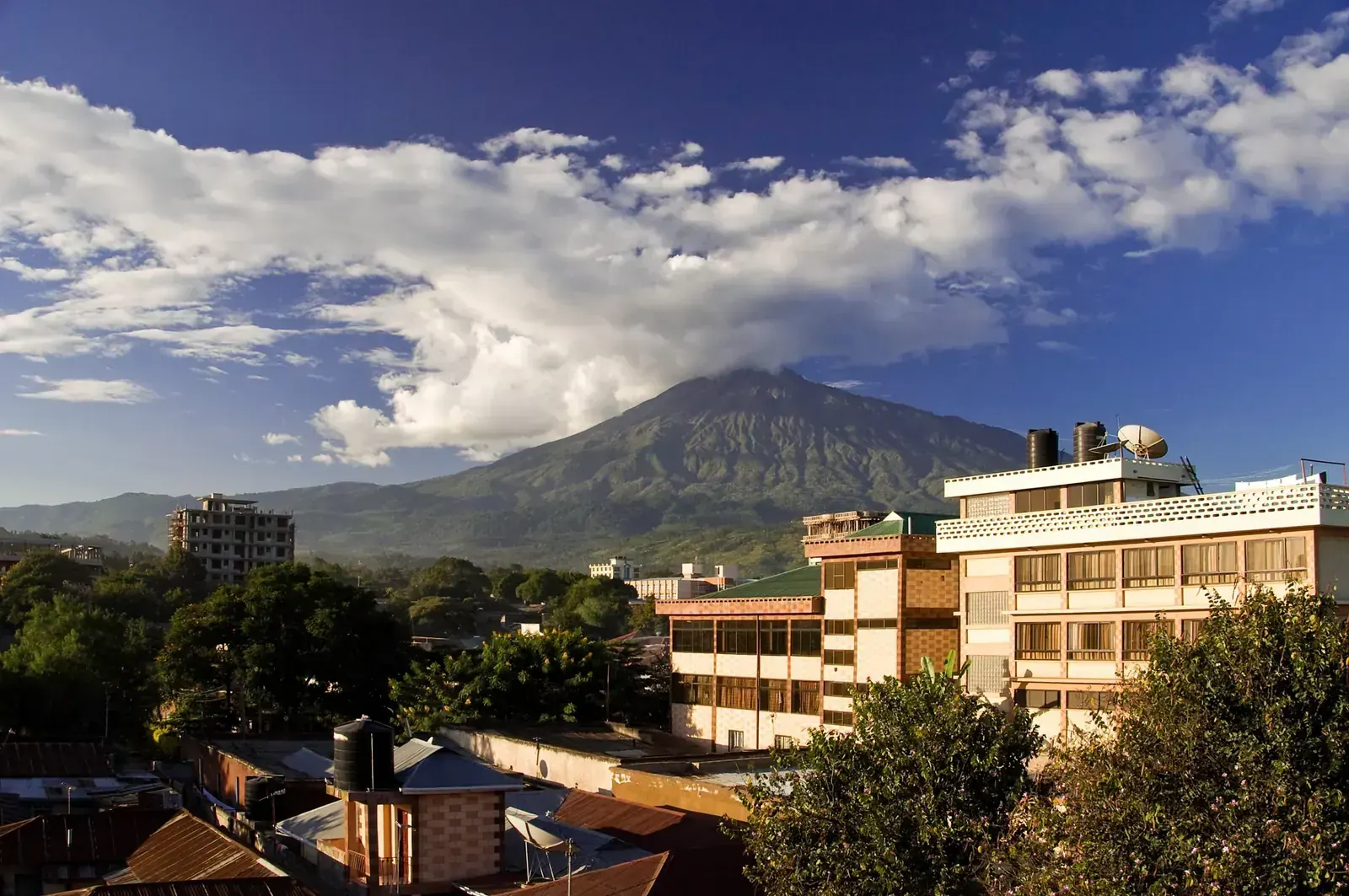
Mount Meru is Tanzania's second-highest mountain, a volcano of 4,562 m that faces Kilimanjaro across the plains east of Arusha. The climb starts at Momella Gate (about 1,500 m) in Arusha National Park and takes 3–4 days, with nights in two park huts. An armed park ranger walks with every group because buffalo and elephants live on the lower slopes. Summit night ends on a narrow crater rim with short chained scrambles, and on a clear morning Kilimanjaro rises over the clouds at sunrise. Here is what to expect, as of November 2026.

- High point
- 4,562 m · Socialist Peak
- Duration
- 3–4 days
- Best months
- Jan–Feb, Jun–Oct
- Difficulty
- Hard, non-technical
- Guide
- Required by park rules
For guidance only. Check details with your operator and the official sources listed at the end before you book.
Where to book and compare Mount Meru trips
Booking sites · affiliate linksEach site lists trips from several operators. Compare dates, group sizes, what is included and reviews there; we don't rank operators.
We earn a commission if you book through these links, at no extra cost to you. Prices and availability are on each site.
On this page
Which route should you choose?
There is one official route to the summit, from Momella Gate on the eastern side of Arusha National Park. It climbs through forest to Miriakamba Hut (2,514 m), then up to Saddle Hut (3,570 m) on the saddle below Little Meru (3,820 m). From there the summit path follows the rim of the great crater, past Rhino Point and Cobra Point, to Socialist Peak. The difference between the options below is the number of days, not the path.
The summit is 4,562 m in Wikipedia and Peakvisor, which cite survey-based lists; other sources give 4,565 m or 4,566 m. It is a walk with no ropes, but the last part is steep: short rock steps with fixed chains and a long drop into the crater on one side. Operators mention loose ash near the top, and say that in ice or strong wind it may be impossible to go beyond Rhino Point.
| Route | Days | Scenery | Crowds | Acclimatisation |
|---|---|---|---|---|
| Momella route in 4 days itinerary belowTwo nights up (Miriakamba Hut, Saddle Hut) and summit day back down to Miriakamba, then out on day 4. The extra night makes summit day shorter and adds time to adjust. | 4 | Excellent | Medium | Very good |
| Momella route in 3 daysSame huts, but on summit day you walk all the way down to the gate. A very long day after a night start, with less time to adjust to the altitude. | 3 | Excellent | Medium | Weaker |
4-day Momella route in 4 days itinerary at a glance
A common 4-day programme. Day 1 climbs from the gate to Miriakamba Hut, usually by the longer southern path past waterfalls and a fig tree you walk under. Day 2 is short, so many walkers go up Little Meru in the afternoon to help their bodies adjust. Summit day starts around 1 to 2 am from Saddle Hut; you reach Socialist Peak around sunrise, with Kilimanjaro to the east and the ash cone in the crater far below, then walk back down to Miriakamba. Bradt's co-author puts that day at 10 to 12 hours. Day 4 goes down to the gate by the shorter northern path, often with a detour to Tululusia waterfall.
- Day 1 Momella Gate Miriakamba Hut night at 2,514 m
- Day 2 Miriakamba Hut Saddle Hut via Little Meru (optional afternoon walk) 3,820 mnight at 3,570 m
- Day 3 Socialist Peak Miriakamba Hut summit 4,562 mnight at 2,514 m
- Day 4 Miriakamba Hut Momella Gate night at 1,500 m
What it really costs
Climbs are sold as packages that include park fees, the ranger, guide, porters, cook and food. The park fees below help you understand the price; the rest of the budget is tips, insurance, the visa and your nights in Arusha.
Insurance that covers Mount Meru
Since 1 October 2026, every foreign visitor entering mainland Tanzania must also buy the government's inbound travel insurance from NIC ($44, up to 92 days). It covers emergency medical care, evacuation and repatriation within its limits; read its terms, and keep your own policy for trekking. That policy should cover walking up to 4,562 m and evacuation from the mountain; most normal travel policies stop lower.
Emergency number in Tanzania: 112. Keep your policy number and your insurer's emergency line with your guide. The US State Department lowered Tanzania to Level 2, exercise increased caution, on 16 October 2026; the UK government still mentions possible protests after the 2025 election. Read both before you go.
Staying connected in Tanzania
Tanzania's main networks are Vodacom, Airtel and Yas (formerly Tigo). Ask your eSIM provider about coverage in Tanzania before you fly. We found no reliable report on signal at the huts, so download offline maps and keep copies of your documents on your phone.
Getting there and where to stay
Fly into Kilimanjaro International Airport (JRO), about 50 km from Arusha. Momella Gate is on the eastern side of Arusha National Park, and many packages include a pickup from Arusha; ask your operator.
Getting there by air
A night or two in Arusha
JRO to Arusha
Gear: rent or buy
Days on the lower slopes are warm, but summit night is cold and windy on the crater rim. We found only one temperature report, about −5 °C at the summit in September 2023; plan for frost. You carry a daypack; porters carry the rest.
- Warm sleeping bag for cold nights (the huts have mattresses)Rent or buy
- Down or synthetic insulated jacketRent or buy
- Broken-in boots with good grip for ash and rockBuy
- Trekking poles for the long descentRent or buy
- Headlamp with spare batteriesBuy
- Gloves you can grip a chain withBuy
- Sun hat, sunglasses and sunscreenBuy
- Rain shell and gaitersRent
Add a few days in Tanzania
Meru sits next to the classic northern safari parks, and many walkers climb it a few days before Kilimanjaro.
Kilimanjaro
Momella Lakes
Ngorongoro and the Crater Highlands
Frequently asked questions
How high is Mount Meru?
Socialist Peak is 4,562 m in Wikipedia and Peakvisor; other sources give 4,565 m or 4,566 m. Either way it is Tanzania's second-highest mountain after Kilimanjaro.
How hard is the climb?
Hard but not technical. Days 1 and 2 are steady climbs through forest and heath. Summit day is long, starts in the middle of the night, and includes short rock steps with chains and an exposed ridge along the crater rim. If you are uneasy with heights, talk to your operator before booking.
Why does a ranger come with us?
An armed park ranger is compulsory because buffalo and elephants live on the lower slopes. Rangers usually fire only to scare animals away. You also need a licensed guide, and climbs are booked through a Tanzanian operator; you cannot climb Meru on your own.
Where do I sleep?
In two park huts, Miriakamba and Saddle: rooms with bunk beds and mattresses, shared toilets and a dining room. Bring your own sleeping bag. Ask your operator how the huts are booked for your dates.
What about food, dietary needs and faith on the trek?
Ask your operator before booking where the food is bought and whether the meat will be halal, or ask for vegetarian meals. Tell them too about any vegan diet, allergy or other need. Kosher food is not something to expect on this trek; bring your own if you need it.
If you pray or keep another religious practice, ask how the walking times fit around it, and how much water there will be at Saddle Hut, for example for wudu. Summit night starts around 1 to 2 am: if you pray Fajr, agree a short stop with your guide. Ramadan 2027 is expected to start around 8 February 2027; if you fast, ask your operator how the walking days and meals can fit.
Which languages do guides speak?
We found no source on the languages Meru guides speak. If you need a particular one, such as English, Arabic, French or Spanish, ask operators directly before booking.
Which visa and insurance do I need?
It depends on your passport: check the current rules on the official Tanzania immigration website before you book. The ordinary Tanzania visa costs $50 (single entry), by eVisa or on arrival; citizens of Saudi Arabia, the UAE, Qatar, Kuwait, Bahrain and Oman, for example, need it. Since 1 October 2026 foreign visitors must also buy the NIC inbound travel insurance ($44) before entry.
A direct flight from a Gulf hub does not trigger the yellow fever rule; a stop of 12 hours or more in a listed country, such as Kenya or Ethiopia, does. Check the official rules shortly before you travel.
Is Meru good acclimatisation for Kilimanjaro?
Many climbers use it that way: a few days up to 4,562 m before a Kilimanjaro climb. Altitude sickness can still happen on Meru. Walk slowly, drink, and tell your guide early about headaches, nausea or dizziness; going down is the main treatment. See a doctor about your health before the trip.
When should I go?
June to October and January to February are the main seasons, between the short rains around November and the long rains from March to May.
Should I do it in three days or four?
Four days gives your body more time to adjust and splits the descent, so summit day is shorter. Three days means walking from Saddle Hut to the summit and all the way down to the gate in one day, after a night start.
Sources and last check
- Wikipedia: Mount Meru (Tanzania), altitude 4,562 m, rank, geology (checked 6 Nov 2026)
- Peakvisor: Mount Meru 4,562 m and the ash cone (checked 6 Nov 2026)
- Bradt co-author: things to know before climbing Mount Meru, July 2024 (huts, altitudes, ranger, season)
- SummitPost: Mount Meru, route, huts and rules (checked 6 Nov 2026)
- Trek report, January 2026: Miriakamba Hut, ranger, the path under a tree (checked 6 Nov 2026)
- TANAPA tariff 2023/24: Arusha NP conservation, hut, rescue, ranger and guide fees (official document, mirrored)
- Mwananchi: TANAPA freezes park fee rises until at least March 2026 (24 Mar 2025)
- Tanzania Immigration: visa guidelines (checked 6 Nov 2026)
- Embassy of Norway in Tanzania: mandatory inbound travel insurance from 1 October 2026
- ATTA: inbound travel insurance prices and validity (29 Sep 2026)
- Ministry of Health: yellow fever entry requirement, 31 Jul 2023
- UK FCDO Tanzania travel advice, emergency number 112 (updated 30 Oct 2026)
- ATTA: US lowers Tanzania advisory to Level 2 (19 Oct 2026)
- Tanzania Meteorological Authority short-rains outlook 2026, via Daily News (21 Sep 2026)
- Flights from Doha to Kilimanjaro (checked 6 Nov 2026)
- Ramadan 2027 expected dates (6 Oct 2026)