
Tre Cime di Lavaredo trek: three days hut to hut around the Three Peaks
The Tre Cime di Lavaredo, or Drei Zinnen, are three limestone towers on the border between South Tyrol and the Veneto. The tallest, Cima Grande, reaches 2,999 m. Many visitors drive up to Rifugio Auronzo and walk the loop in a day. On foot from Val Fiscalina above Sesto, you can spend three days and two nights in the huts instead. The route climbs to Rifugio Comici, passes Rifugio Pian di Cengia (2,528 m) by the saddle of the same name and reaches Rifugio Locatelli, facing the famous north walls. A fourth day closes the full loop around the peaks. Here is what to expect, from the 2026 road and bus bookings to the hut food.

- High point
- 2,528 m · Rifugio Pian di Cengia, by Forcella Pian di Cengia
- Duration
- 3–4 days
- Best months
- Jun–Sep
- Difficulty
- Moderate, non-technical
- Guide
- Not required
For guidance only. Check details with your operator and the official sources listed at the end before you book.
Where to book and compare Tre Cime di Lavaredo trips
Booking sites · affiliate linksEach site lists trips from several operators. Compare dates, group sizes, what is included and reviews there; we don't rank operators.
We earn a commission if you book through these links, at no extra cost to you. Prices and availability are on each site.
On this page
Which route should you choose?
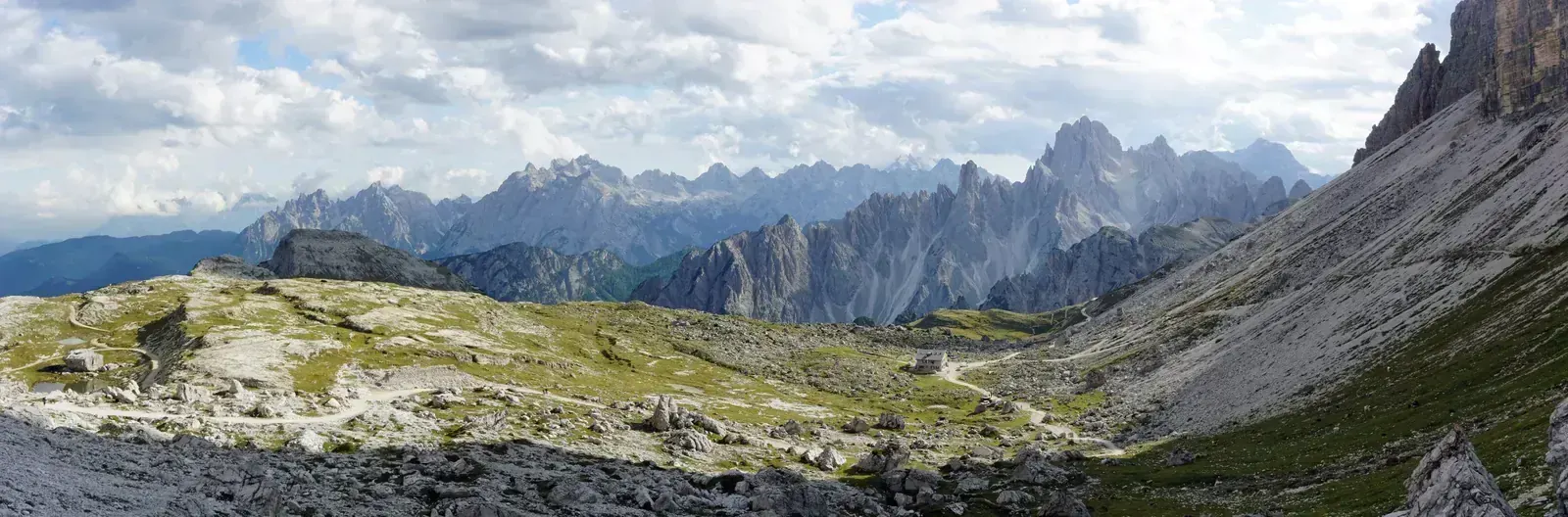
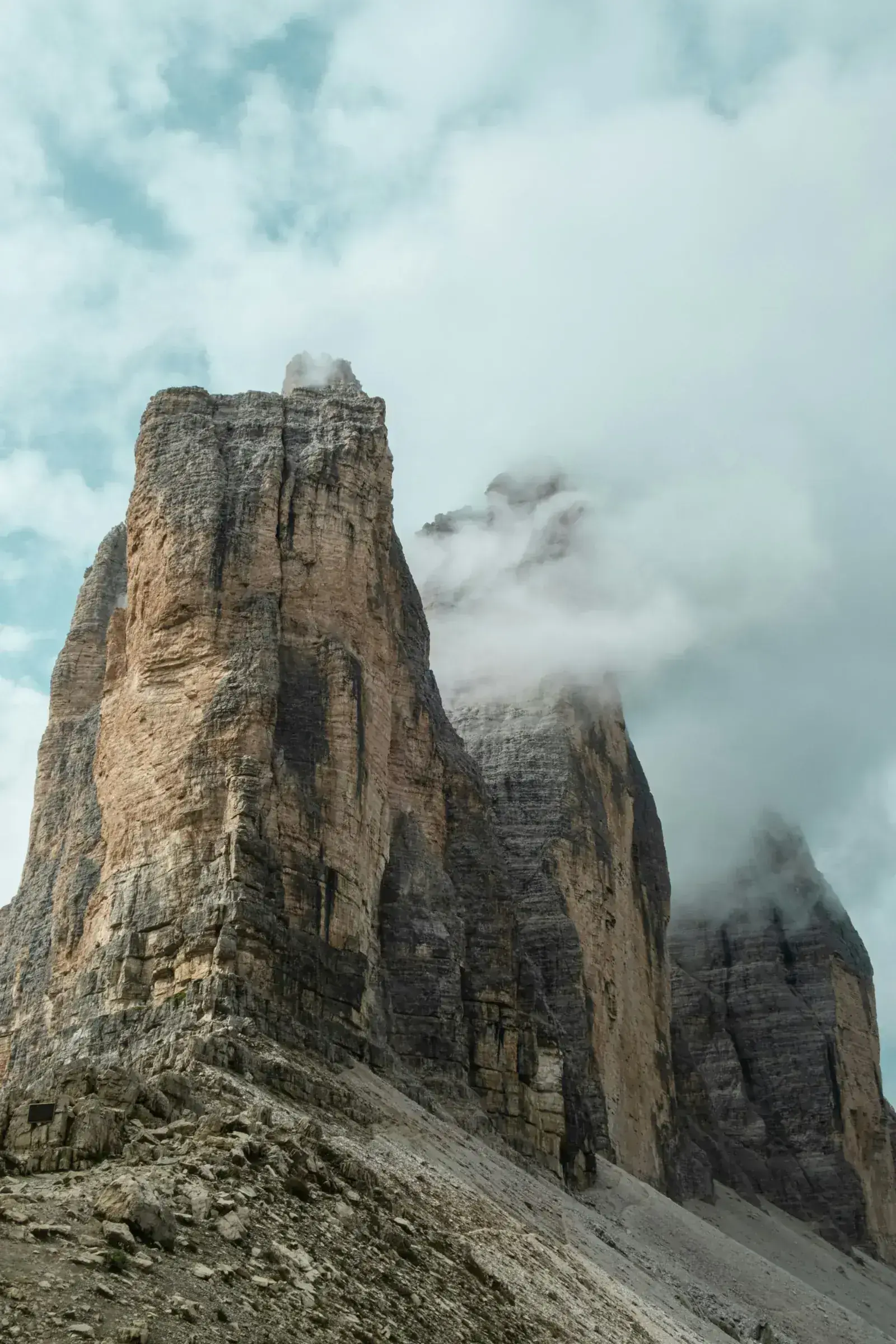
The Tre Cime stand in the Sesto Dolomites, inside the Drei Zinnen / Tre Cime Nature Park on the South Tyrol side. Cima Grande (2,999 m), Cima Ovest (2,973 m) and Cima Piccola (2,857 m) are not on the walking route; the paths circle their base. The front line of 1915 to 1917 between Italy and Austria-Hungary ran through these peaks, and trenches, tunnels and plaques remain.
There are two ways in. From the south, a toll road climbs from Misurina to Rifugio Auronzo, where most people start the classic day loop. From the north, Val Fiscalina above Sesto has no toll and leads to the huts on foot. Crowds are the main issue: PlanetMountain reported 7,000–8,000 visitors a day at the August peak in 2025, which led to the booking system for the road.
| Route | Days | Scenery | Crowds | Acclimatisation |
|---|---|---|---|---|
| Hut to hut from Val Fiscalina, three days and two nights itinerary belowVal Fiscalina to Rifugio Comici, then over the Pian di Cengia saddle to Rifugio Locatelli, and back down Val Sasso Vecchio. About 18 km with 1,090 m of ascent, by the listing's own figures; another listing for the same route gives about 26 km. It avoids the toll road altogether, and the two nights let you see the north walls before and after the day visitors. | 3 | Excellent | Medium | Very good |
| Four days with the full loop and a third night at Auronzo or LavaredoThe same first two days, then a short day from Locatelli past Malga Langalm and Forcella di Mezzo to Rifugio Auronzo (2,333 m) or Rifugio Lavaredo (2,344 m). Day 4 crosses Forcella Lavaredo (2,454 m) back to Locatelli and descends to Val Fiscalina. This shape is assembled from official stage data; no 4-day package was found on the booking platforms. | 4 | Excellent | High | Very good |
| Classic day loop from Rifugio AuronzoA day hike, not a trek: 9.5 km to 9.7 km and about 400 m of ascent, in about three hours, via Lavaredo, Forcella Lavaredo, Locatelli and Malga Langalm. Driving up needs an online toll-road booking in 2026 (€40 a car). Without a car, take bus 444 from Dobbiaco or the shuttle from Misurina. | 1 | Excellent | High | Very good |
3-day Hut to hut from Val Fiscalina, three days and two nights itinerary at a glance
The itinerary below is the three-day, two-night route that the booking platforms sell. Day 1 leaves the Val Fiscalina car park on path 102, passes Rifugio Fondovalle and climbs path 103 up Val Sassovecchio to Rifugio Comici: about 6 km and 710 m of ascent, a little over three hours. Day 2 follows path 101 to Rifugio Pian di Cengia and the saddle beside it, then contours behind Monte Paterno to Rifugio Locatelli: about 5 km, three hours. Day 3 descends path 102 down Val Sasso Vecchio, below the north wall of Croda dei Toni, back to the car park: about 7 km and 930 m of descent.
Times differ between the listings and the signposts, so allow a margin. Day 2 is short enough to add the full loop round the Tre Cime from Locatelli, at least six hours in all. To spread it out, take a fourth day: walk from Locatelli to Rifugio Auronzo or Lavaredo for a third night, then cross Forcella Lavaredo back to Locatelli and descend to Val Fiscalina.
The Monte Paterno WWI tunnels start near Locatelli. They are optional and not on the trek line. The tunnel is long, steep and low, so a headlamp is essential. Going beyond it, to the summit or Forcella del Camoscio, means a via ferrata: harness, ferrata set, helmet and experience, or a guide.
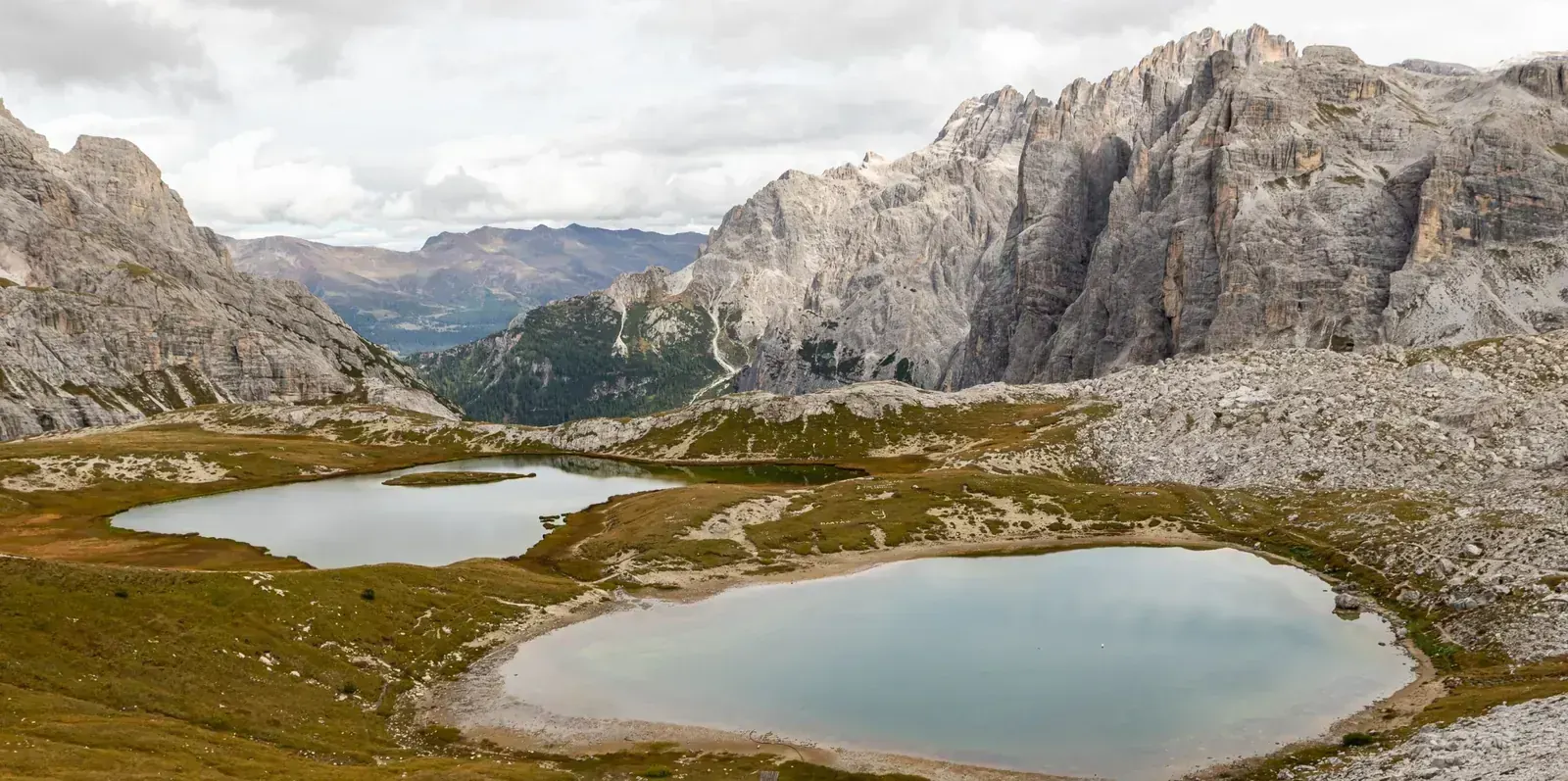
- Day 1 Val Fiscalina (Fischleinboden) car park Rifugio Zsigmondy-Comici night at 2,224 m
- Day 2 Rifugio Locatelli (Dreizinnenhütte) via Rifugio Pian di Cengia and Forcella Pian di Cengia 2,528 mnight at 2,405 m
- Day 3 Val Fiscalina (Fischleinboden) car park night at 1,454 m
What it really costs
No trekking permit is needed. The main costs are the huts, getting to the valley, and the bus or toll road if you start from Auronzo. Here is what to plan around.
Insurance that covers Tre Cime di Lavaredo
Take a travel policy that covers hiking and helicopter rescue in Italy, and via ferrata if you plan the Monte Paterno tunnels or ferrata. Rescue can be billed to you: the Veneto side can charge up to €90 a minute for a helicopter, capped at €7,500, when a call is not justified, and South Tyrol charges a fee. Most travellers from outside Europe have no European health card (EHIC).
Alpine-club membership includes rescue cover in some clubs, but AVS covers only residents of Europe or the Mediterranean rim. Check residence conditions before joining a club for its insurance. In an emergency call 112 (118 also works in the Veneto).
Staying connected in Italy
TIM, Vodafone, WindTre and Iliad sell SIMs and eSIMs; you need your passport, and the shop may create a codice fiscale (tax code) for you. Signal is patchy in high valleys and at huts, so download an offline map before you set off.
Getting there and where to stay
Fly into Venice (VCE), Milan or Munich, then travel to Dobbiaco (Toblach) in the Puster Valley or to Cortina d'Ampezzo. Sesto is the base for Val Fiscalina; Dobbiaco station is the hub for buses to Sesto and to Rifugio Auronzo.
Getting there by air
Venice to Cortina, Dobbiaco and Sesto
A night in Sesto before you start
Gear: rent or buy
This is hut trekking: dinner, breakfast and a bed with blankets are provided, so you carry a light pack. Days in Dobbiaco run 19 °C to 22 °C in summer, but nights near the huts can approach freezing in June and September. Bring layers for the cold evenings and a sleeping-bag liner.
- Hiking boots with good grip for scree and rocky pathsBuy
- Backpack of 30–40 litresRent or buy
- Sleeping-bag liner (compulsory in CAI huts)Buy
- Warm layer, waterproof jacket, hat and glovesBuy
- Headlamp (essential for the Monte Paterno tunnels)Buy
- Via ferrata harness, set and helmet, only if you go beyond the tunnelsRent
- Sun hat, sunglasses and high-factor sunscreenBuy
- Trekking poles for the descent down Val Sasso VecchioRent or buy
- Cash, offline map, first-aid kit and power bankBuy
Add a few days in Italy
A few short trips fit around the trek, before or after it.
Cadini di Misurina viewpoint
Lago di Misurina
Lago di Braies (Pragser Wildsee)
Frequently asked questions
How hard is the Tre Cime hut-to-hut trek?
Moderate. The days are short, about 5 km to 7 km, but day 1 climbs about 710 m and day 3 drops about 930 m on rocky paths. There is no climbing on the main route. Times differ between the listings and the signposts, so allow a margin.
Do I need a permit or a guide?
No permit is needed, and a guide is not required on the main route. A guide makes sense for the Monte Paterno via ferrata if you lack experience. Camping is restricted, so plan on the huts, and leave the drone at home in the nature park.
How do I book the huts?
Book directly with each hut, by its online form, email or phone; Rifugio Pian di Cengia takes bookings by phone only. Huts around the Tre Cime are often full in July and August, so book months ahead. Deposits are common. Check each hut's opening dates for your year: most open from mid or late June to late September.
Can I drive to Rifugio Auronzo?
Yes, on the toll road from Misurina, but only with an online booking in 2026 (€40 a car, valid 12 hours). Without a car, bus 444 runs from Dobbiaco and a Dolomiti Bus shuttle runs from Misurina. Starting from Val Fiscalina avoids the toll road altogether.
What about food, dietary needs and faith on the trek?
No hut on this route states that it serves halal meals, and pork such as speck appears in many dishes. Vegan and kosher meals are not something to expect in the huts, so ask early or bring your own. Whatever your diet or allergy, ask in writing in your booking for what you need: a pork-free dinner and whether stocks, sauces or ragù contain speck, pancetta or lard, a vegetarian or fish main, and whether wine is used in the cooking. Confirm a few days ahead.
For religious practice, you use the hut or a quiet spot on the trail; if you pray, bring a light mat and a qibla app. Mosques are few in the mountains; Muslim workers in Cortina have reported the nearest one in Brunico, more than an hour away.
Which languages do guides and hut staff speak?
Hut staff speak Italian and German, and English is common in the busy huts. If you book a guided trip, ask the operator before you pay about other languages, such as Arabic, French or Spanish.
Should I tip?
Tipping is not expected in Italy. The coperto, a cover charge of about €1–3 on restaurant bills, is not a tip. Rounding up is fine if you were well looked after.
Which visa do I need?
It depends on your passport. Italy is in the Schengen area: check the rules for your nationality on Visto per l'Italia, the Italian foreign ministry's visa site, before you book. Visa-free visitors can stay up to 90 days in any 180; UAE citizens, for example, need no visa. Others need a Schengen visa (€90 for adults in 2026), among them Saudi, Qatari, Kuwaiti, Bahraini and Omani citizens, who since May 2024 can get a five-year multiple-entry visa on their first application. Apply at the Italian embassy or consulate, or its visa centre, where you live; if you live outside your home country, the rules for your own passport still apply. Since April 2026 the EU Entry/Exit System takes your fingerprints and photo on your first entry. ETIAS, the online travel authorisation for visa-free visitors, is not running yet.
When is the best time to go?
From late June to mid or late September, when the huts are open. Late June to mid-July and September are quieter; the huts are busiest in August. Snow can stay on the high passes until early July.
Is it safe?
The main route has no exposed climbing, but weather changes fast. Afternoon thunderstorms are common, so start early. Bring a headlamp for the Monte Paterno tunnels, and do not continue onto the ferrata without the kit and experience. In an emergency call 112 (118 also works in the Veneto).
Sources and last check
- Bookatrekking: Tre Cime di Lavaredo 3 days, stage distances and ascent (checked 6 Nov 2026)
- Bookatrekking: Tre Cime di Lavaredo trek 3 days, second listing, total distance (checked 6 Nov 2026)
- Bookatrekking blog: hiking the Tre Cime di Lavaredo, huts full in July and August (checked 6 Nov 2026)
- dolomiti.it: Giro delle Tre Cime di Lavaredo, day loop stages (checked 6 Nov 2026)
- dolomiti.it: Tre Cime di Lavaredo peaks and huts (checked 6 Nov 2026)
- pustertal.org: Tre Cime di Lavaredo circular hike (checked 6 Nov 2026)
- Südtiroler Land: from hut to hut in the Tre Cime area (checked 6 Nov 2026)
- suedtirol.info: Büllelejochhütte / Rifugio Pian di Cengia, altitude and booking (checked 6 Nov 2026)
- suedtirol.info: Dreizinnenhütte / Rifugio Locatelli (checked 6 Nov 2026)
- Montagna di Viaggi: three-hut loop from Val Fiscalina, Forcella Pian di Cengia (July 2024)
- Montagna.tv: Monte Paterno WWI tunnels and ferrata (July 2024)
- Montagna.tv: Rifugio Locatelli – Sepp Innerkofler (July 2021)
- Montagna.tv: Rifugio Comici – Zsigmondy (August 2021)
- Volpi del Vajolet: Rifugio Zsigmondy-Comici and Val Fiscalina car park (August 2026)
- Rifugio Auronzo: season, beds and half-board prices (checked 6 Nov 2026)
- Drei Zinnen tourism board: Rifugio Lavaredo (checked 6 Nov 2026)
- Drei Zinnen tourism board: summer bus timetable 2026, lines 440, 444, 445, 446 (checked 6 Nov 2026)
- dolomiti.it: Tre Cime toll road open, 2026 prices and booking (8 June 2026)
- SiViaggia: Tre Cime road booking compulsory in 2026 (14 May 2026)
- PlanetMountain: online booking for the Rifugio Auronzo road, road booking and visitor peaks in August (May 2025)
- South-tirol.com: Auronzo toll road and bus 444 booking (checked 6 Nov 2026)
- In-moments: Tre Cime without a car, bus 444 fare (blog, checked 6 Nov 2026)
- Dolomiti Bus: Misurina–Rifugio Auronzo shuttle 2026 (22 May 2026)
- Dolomiti Bus: line 72 Venice–Cortina timetable, summer 2026
- Province of Bolzano: Drei Zinnen / Tre Cime Nature Park (checked 6 Nov 2026)
- Wikipedia (via Wikiwand): Tre Cime di Lavaredo, summit heights and WWI front (checked 6 Nov 2026)
- CAI: 2026 hut tariff circular, deposits and sleeping-bag liner
- Brooke Beyond: Dolomites huts, half board and crowds (blog, updated 5 Oct 2026)
- Rifugio Averau: hut menu, example of pork in Dolomites hut food (2024)
- AP via WTOP: Muslim prayer and halal shops around Brunico and Cortina (February 2026)
- Flightconnections: Dubai–Venice flights (checked 6 Nov 2026)
- Italiavola: Emirates resumes Venice and Bologna (March 2026)
- The National: five-year Schengen visas for GCC citizens (May 2024)
- Italian Embassy Muscat: Schengen visa fees from 1 April 2026
- Embassy of Poland in Qatar: EES fully operational from 10 April 2026
- Wikipedia (IPFS mirror): Toblach / Dobbiaco climate, 1971–2000 (checked 6 Nov 2026)
- Montagna.tv: who pays for mountain rescue, regional rules (July 2025)
- Regione Veneto: 112 single emergency number timeline (10 September 2026)
- AVS: 2026 insurance cover and residence conditions
- Bergwelten: wild camping rules in Italy by region (July 2025)
- Sudtirol.com: South Tyrol tourist tax from 2025
- Learn Italian Pod: coperto and tipping in Italy (June 2026)
- Italy Handbook: local eSIMs and SIM rules (September 2026)
- CAI youth commission: via ferrata kit, EN 958 (May 2026)
- Soccorso Alpino Trentino via il Dolomiti: afternoon storms at altitude (July 2026)
- In-moments: Lago di Braies 2026 access rules (blog, checked 6 Nov 2026)
- Bookatrekking: Cadini di Misurina trek, viewpoint near Rifugio Auronzo (checked 6 Nov 2026)