
Puez–Odle hut-to-hut: four days across the Puez-Geisler nature park, from Val di Funes to Val Gardena
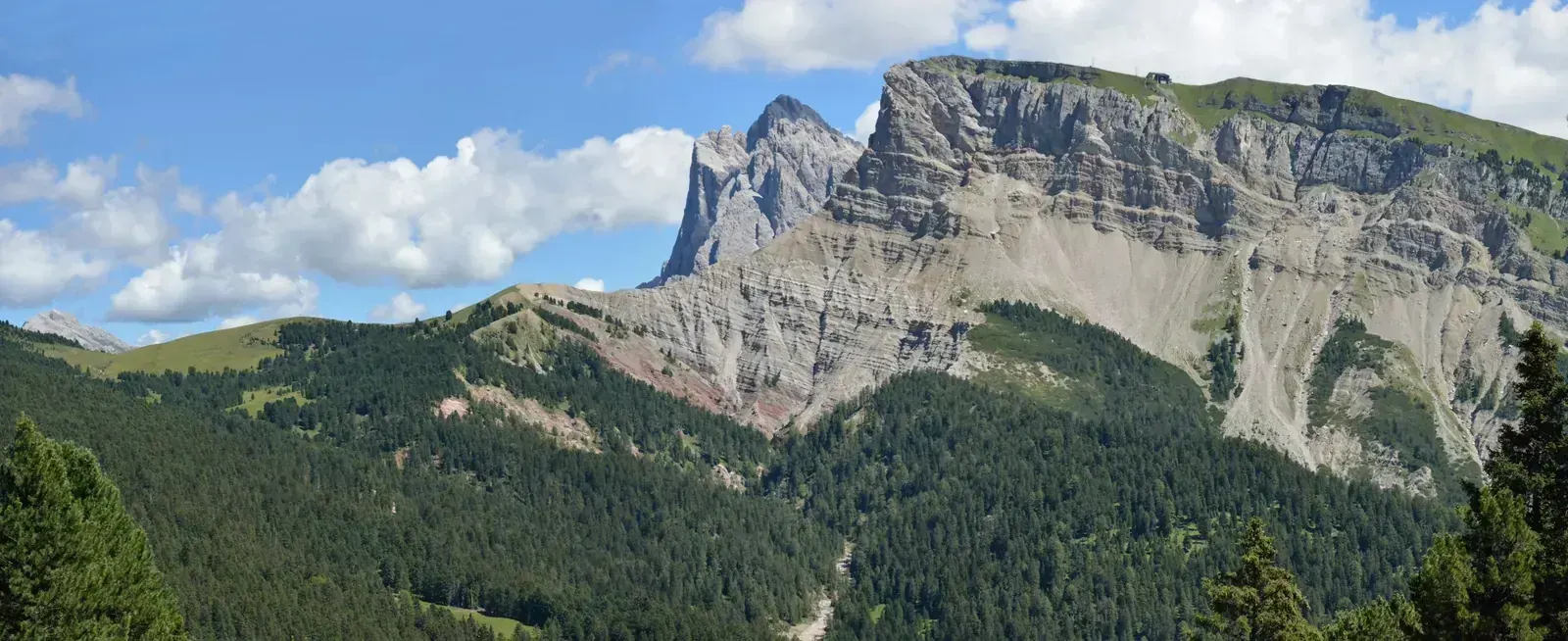
The Puez-Odle nature park (Puez-Geisler in German) covers 10,729 hectares of South Tyrol between Val di Funes, Val Gardena and Val Badia. Its name says what you walk under: "Odle" is Ladin for needles, the row of rock spires above the pastures. The park is one of the nine systems of the Dolomites UNESCO World Heritage site, prized for a rock record of about 200 million years. This four-day traverse starts at Zannes in Val di Funes, crosses the high Puez plateau and ends above Ortisei on the Seceda ridge. It is hut-to-hut on marked mountain paths, with short cabled passages at two saddles and no via ferrata kit needed. Here is what to expect, from the stages and huts to the 2026 changes on Seceda and the closed Rifugio Firenze.
- High point
- 2,617 m · Forcella de la Roa (Furcia dla Roa), between Rifugio Genova and Rifugio Puez
- Duration
- 2–4 days
- Best months
- Jun–Sep
- Difficulty
- Moderate, non-technical
- Guide
- Not required
For guidance only. Check details with your operator and the official sources listed at the end before you book.
Where to book and compare Puez–Odle hut-to-hut trips
Booking sites · affiliate linksEach site lists trips from several operators. Compare dates, group sizes, what is included and reviews there; we don't rank operators.
We earn a commission if you book through these links, at no extra cost to you. Prices and availability are on each site.
On this page
Which route should you choose?
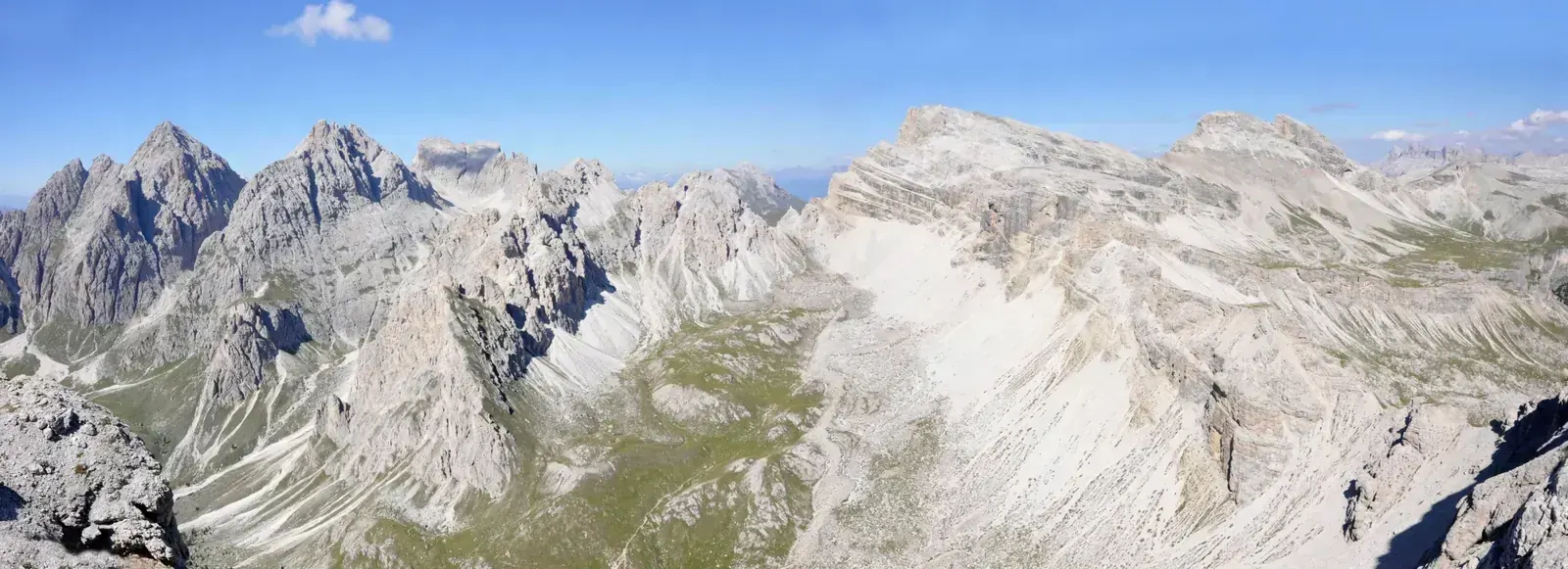
The Puez-Odle nature park was founded in 1978 and enlarged in 1999. It spans seven municipalities, from Funes in the north-west to Corvara in Val Badia. The Odle spires rise above the pastures of Val di Funes; the Puez plateau is a high stony tableland.
Most hut-to-hut routes link the same few huts: Rifugio Genova above Val di Funes, Rifugio Puez on the plateau, and the Cisles pastures above Val Gardena. The Alta Via 2 crosses the park from north to south. Below are four ways to walk it, from two to four days; the itinerary shows the four-day traverse from Val di Funes to Val Gardena.
| Route | Days | Scenery | Crowds | Acclimatisation |
|---|---|---|---|---|
| Zannes to Ortisei traverse, four days itinerary belowVal di Funes to Val Gardena with three hut nights: Rifugio Genova, Rifugio Puez and the Col Raiser area. About 27 km on foot to Seceda, with the cable car down to Ortisei. Days 2 and 3 follow the Alta Via 2 and trail 2 across the Puez plateau. | 4 | Excellent | Medium | Very good |
| Alta Via 2 section, Bressanone to Passo GardenaStarts with the cable car from St. Andrea above Bressanone and crosses the Plose, Rifugio Genova and Rifugio Puez to Passo Gardena (2,121 m). About 35 km, with roughly 1,900 metres of ascent. Rifugio Città di Bressanone on the Plose was closed for renovation in 2025: check whether it has reopened. | 4 | Excellent | Medium | Very good |
| Campill (Longiarü) loop, three daysA loop from Campill in Val Badia over the Peitlerscharte to Rifugio Genova, then the Roa and Nives saddles to Rifugio Puez and back down the Antersasc valley. About 25 km and 1,800 metres of ascent. The Nives route includes a short via ferrata section. | 3 | Excellent | Low | Very good |
| Selva to Seceda, two daysOne night at Rifugio Puez: up the Vallunga from Selva on day 1, then west over Forcella de Sieles and the Cisles pastures to Seceda on day 2 (about 11 km). Seceda draws big crowds in summer. | 2 | Excellent | High | Very good |
4-day Zannes to Ortisei traverse, four days itinerary at a glance
Day 1 is short: from the Zannes car park at 1,680 m a path climbs past the Kaserill pasture to Rifugio Genova, about 4 km and 620 metres up in under two hours. With a spare morning, the Adolf-Munkel trail under the north faces of the Odle makes a longer approach.
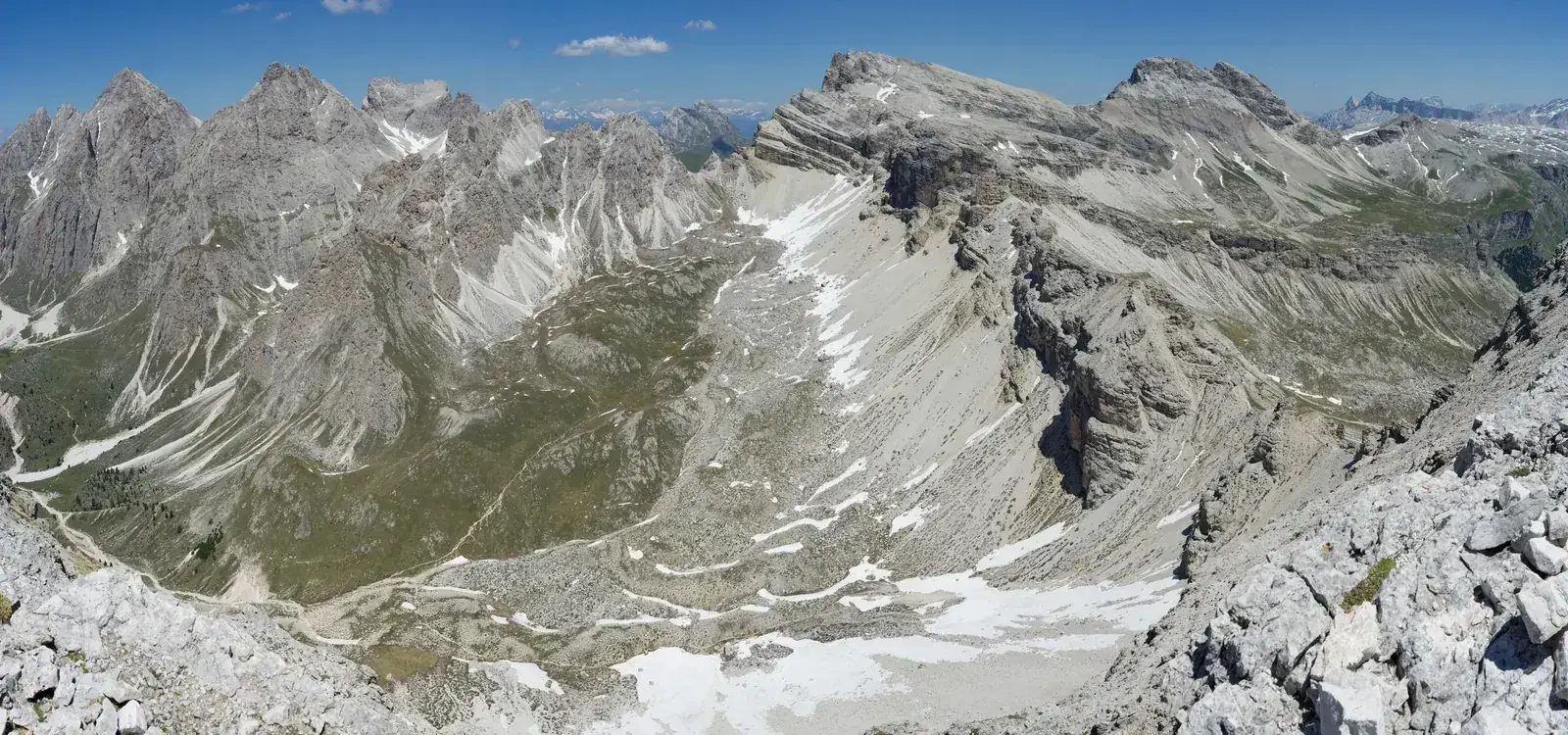
Day 2 is the big one, about 12 km on the Alta Via 2 and five to six hours of walking. You cross Furcia de Medalges and the Medalges pasture, then climb the steep scree gully to Forcella de la Roa (2,617 m), the high point of the trek. A short, narrow, exposed rock step there has a cable handrail. Then the path crosses the Puez plateau to Rifugio Puez.
Day 3 heads west on trail 2 to Forcella de Sieles, with a few exposed passages secured with steel cables below the saddle. It then drops to the Cisles pastures, about two and a half to three hours to the Firenze area. Spend the night at Col Raiser or at the Fermeda hut on the Seceda pasture.
Day 4 climbs past the Pieralongia meadows to Seceda (2,519 m), with the famous tilted faces of the Odle beside you. Take the cable car down to Ortisei, or walk down in about two and a half hours. Forcella Pana was reported closed by rockfall in August 2026, so this route uses the Pieralongia path (2B).
- Day 1 Zannes (Val di Funes) Rifugio Genova (Schlüterhütte) night at 2,297 m
- Day 2 Rifugio Puez (Puezhütte) via Forcella de la Roa 2,617 mnight at 2,475 m
- Day 3 Col Raiser area: Almhotel Col Raiser or the Fermeda hut on the Seceda pasture via Forcella de Sieles 2,528 mnight at 2,106 m
- Day 4 Ortisei (Val Gardena) via Seceda 2,519 mnight at 1,245 m
What it really costs
Four days in Puez-Odle cost mostly hut nights: no trekking permit or park fee applies. Add the Seceda cable car and path fee, trains and buses to the start, the visa if you need one, and insurance.
Insurance that covers Puez–Odle hut-to-hut
Take a travel policy that covers hiking in the mountains and helicopter rescue. South Tyrol can charge rescued people a fee. Most travellers from outside Europe have no European health card (EHIC).
Some European alpine clubs include rescue cover with membership, but AVS covers only residents of Europe or the Mediterranean rim. Check residence conditions before joining an alpine club for its insurance. In an emergency, call 112.
Staying connected in Italy
TIM, Vodafone, WindTre and Iliad sell SIMs and eSIMs in Italy; shops ask for your passport and may create a tax code (codice fiscale) for you.
Signal is patchy in the high valleys and at the huts. Download an offline map before you start and tell the next hut if you will be late.
Getting there and where to stay
Fly into Venice (VCE), Milan or Munich, then take the train up the Brenner line to Bressanone for the start in Val di Funes. Ortisei, at the end, is about 40 km from Bolzano by road.

Getting there by air
Train to Bressanone, bus to Zannes
A night in Bressanone or Val di Funes, and in Ortisei
Gear: rent or buy
This is hut-to-hut walking: the huts give you a bed, blankets, dinner and breakfast, so you carry only clothes, water and lunch. Plan for cold mornings and afternoon storms. At about 2,000 m summer days are 11 °C to 16 °C, and higher up, above 2,500 m, it is a few degrees colder.
- Hiking boots with a stiff sole for scree and rockBuy
- Backpack of 30–40 litresRent or buy
- Sleeping-bag liner (mandatory in CAI huts)Buy
- Waterproof jacket and trousersBuy
- Warm fleece or down layer, hat and glovesBuy
- Trekking poles for the scree gullies and long descentsRent or buy
- Light crampons or microspikes in early summer, if the Roa gully still holds snowRent or buy
- Sun hat, sunglasses and high-factor sunscreenBuy
- Headlamp, first-aid kit and power bankBuy
- Via ferrata harness, set and helmet, only for the Nives variantRent or buy
- Cash for huts that don't take cards, showers and the Seceda path feeBuy
Add a few days in Italy
A spare day in Val di Funes or Val Gardena adds some of the park's most photographed views.
St. Magdalena church and the Odle
Adolf-Munkel trail
Alpe di Siusi
Frequently asked questions
How hard is the Puez–Odle hut-to-hut?
Moderate. Days are 4 km to 12 km on marked mountain paths, with up to about 900 metres of ascent on day 2. The hardest part is the steep scree gully up to Forcella de la Roa (2,617 m), which can hold hard snow in early summer. You need a sure foot and a head for heights, but no climbing skills.
Are there cables or via ferrata sections?
Short cabled passages at two saddles, not a via ferrata. A narrow, exposed rock step at Forcella de la Roa has a cable handrail, and a few passages below Forcella de Sieles are secured with steel cables. No harness is needed on the main route. The Nives variant on day 2 includes a short via ferrata section that does need a harness, set and helmet.
Do I need a permit or a guide?
No. No trekking permit or park ticket is needed, and the paths are marked. In the nature park, picking flowers, mushrooms, fossils or minerals is forbidden, camping is not allowed (only an emergency bivouac is tolerated), and drones should stay at home. Groups who want a guide can book through an operator.
How do I book the huts, and is Rifugio Firenze open?
Book directly with each hut, by its online form, email or phone; most take bookings from January, and July and August fill months ahead. Rifugio Firenze (Regensburger Hütte) is closed for reconstruction, and its demolition and rebuild were approved in September 2026 with no dates. Check whether it has reopened; until then, the Col Raiser hotel or the Fermeda hut cover night 3.
What changed at Seceda?
In July 2025 landowners charged €5 to cross their pastures on the path to the Seceda viewpoint, and in June 2026 a staffed booth charged the same. Since 22 May 2026 the Seceda cable car sells online tickets for 30-minute slots, which cannot be refunded or changed. Book your slot for day 4 in advance and carry cash.
What about food, dietary needs and faith on the trek?
No hut on this route states halal meals, and pork is everywhere in South Tyrolean cooking: speck, dumplings with speck, barley soup with smoked pork. Meat-free dishes such as spinach and ricotta pasta, polenta with cheese and Kaiserschmarrn are common. Vegan and kosher meals are not something to expect in the huts, so ask early or bring your own. Whatever your diet or allergy, ask the hut in writing: for a pork-free dinner, whether the stock or sauce contains speck or lard, and for a vegetarian or fish main.
For religious practice, you use the hut or a quiet spot on the trail; if you pray, bring a light mat and a qibla app. Bolzano has Islamic centres. If you need special food for the trail (halal, kosher, vegan…), stock up in the valley towns.
Which languages do guides and hut staff speak?
Hut staff speak Italian and German, and English is common in the busy huts. If you book a guided trip, ask the operator before you pay about other languages, such as Arabic, French or Spanish.
Should I tip?
Tipping is not expected in Italy. The coperto, a cover charge of a few euros on restaurant bills, is not a tip. Rounding up is fine.
Which visa do I need?
It depends on your passport. Italy is in the Schengen area: check the rules for your nationality on Visto per l'Italia, the Italian foreign ministry's visa site, before you book. Visa-free visitors can stay up to 90 days in any 180; UAE citizens, for example, need no visa. Others need a Schengen visa (€90 for adults in 2026), among them Saudi, Qatari, Kuwaiti, Bahraini and Omani citizens, who since May 2024 can get a five-year multiple-entry visa on their first application. Apply at the Italian embassy or consulate, or its visa centre, where you live; if you live outside your home country, the rules for your own passport still apply. Since April 2026 the EU Entry/Exit System takes your fingerprints and photo on your first entry. ETIAS, the online travel authorisation for visa-free visitors, is not running yet.
When is the best time to go?
Late June to mid-September, while the huts are open. Late June to mid-July and September are quieter; the huts are busiest in August. In June and early July, snow can still lie in the Roa gully. From late September the first snow is possible and huts start to close.
Is it safe?
The paths are well marked, but the main risks are afternoon thunderstorms, slips on scree, and snow in early summer. Start early and be off the passes by early afternoon. Seceda draws big crowds in summer: about 8,000 hikers were reported there on one day in 2025. In an emergency call 112; rescue can be charged to you, so make sure your insurance covers helicopter rescue.
Sources and last check
- Province of Bolzano: Puez-Odle nature park facts (checked 6 Nov 2026)
- Alta Badia: Puez-Odle nature park and park rules (checked 6 Nov 2026)
- Dolomiti UNESCO Foundation: Puez-Odle, system 6 of 9 (checked 6 Nov 2026)
- Roter Hahn: Zannes to Schlüterhütte, altitudes (checked 6 Nov 2026)
- Bergsteigerdörfer: Schlüterhütte, beds and season (checked 6 Nov 2026)
- Montagna.tv: Rifugio Genova since 1898 (July 2025)
- Bergwelten: Zannes to Schlüterhütte, day 1 (checked 6 Nov 2026)
- Hoehenrausch: Adolf-Munkel trail (checked 6 Nov 2026)
- Cicerone: Alta Via 2 planning guide, Genova to Puez (updated March 2026)
- Bookatrekking: short Alta Via 2 stage data, Plose–Genova–Puez–Passo Gardena (checked 6 Nov 2026)
- Bookatrekking: Selva–Puez–Seceda stage data (checked 6 Nov 2026)
- Trip report: Alta Via 2 north, Genova to Puez (September 2025)
- PlanetMountain: Rifugio Puez (checked 6 Nov 2026)
- Hoehenrausch: Puezhütte, places and times (checked 6 Nov 2026)
- Val Gardena tourism: Puez tour, Forcella de Sieles and cables (checked 6 Nov 2026)
- Val Gardena tourism: alpine huts, Puez 2025 dates and Firenze closed for reconstruction (checked 6 Nov 2026)
- stol.it: Regensburger Hütte to be demolished and rebuilt (September 2026)
- Val Gardena tourism: Almhotel Col Raiser (checked 6 Nov 2026)
- val-gardena.net: Fermeda hut on the Seceda pasture (checked 6 Nov 2026)
- Moonhoney Travel: Seceda and Regensburger hut, Forcella Pana closed (updated 3 Aug 2026)
- Bergtour-online: three days in Puez-Geisler, Campill loop (checked 6 Nov 2026)
- Euronews: Seceda landowners' path fee (August 2025)
- il Dolomiti: Seceda cash booth on the path (25 Jun 2026)
- val-gardena.net: Seceda cable car time slots 2026 (May 2026)
- suedtirol.com: summer 2026 lift opening dates
- Funes: Zannes parking reservation (checked 6 Nov 2026)
- südtirolmobil: buses into Val di Funes to Zannes (2022)
- Val Gardena: bus timetable 2025–2026, lines 350 and 360
- Smithsonian: St. Magdalena and visitor limits in Val di Funes
- Ulysse: Santa Maddalena road limits 2026
- e656.net: Venice–Bressanone direct trains (checked 6 Nov 2026)
- Seat61: Munich–Bolzano railjets (checked 6 Nov 2026)
- Val Gardena: distances from airports (checked 6 Nov 2026)
- FlightConnections: Dubai–Venice flights (checked 6 Nov 2026)
- Italiavola: Emirates resumes Venice and Bologna (March 2026)
- CAI: 2026 hut tariff circular, deposits and liner rule
- Val Gardena tourism: typical food in Val Gardena (checked 6 Nov 2026)
- AP via WTOP: Muslims in the Olympic host towns, prayer and halal shops (February 2026)
- The National: five-year Schengen visas for GCC citizens (April 2024)
- Italian Embassy Muscat: Schengen visa fees from 1 April 2026
- Province of Bolzano: 112 single emergency number leaflet
- Montagna.tv: who pays for mountain rescue, by region (July 2025)
- AVS: member insurance cover and residence conditions (folder 01/2026)
- Bergwelten: wild camping rules in Italy (July 2025)
- South Tyrol provincial law 15/1997 on motorised aircraft in nature parks
- sudtirol.com: South Tyrol tourist tax since 2025
- Learn Italian Pod: coperto and tipping in Italy (June 2026)
- Italy Handbook: local SIMs and eSIMs in Italy (September 2026)
- Wikipedia: Toblach climate, valley reference (1971–2000)
- Wikipedia: Rolle Pass climate normals 1991–2020
- il Dolomiti: afternoon storms and rescue planning (27 Jul 2026)
- CAI: via ferrata kit guide (May 2026)
Image credits
- Photo: Wolfgang Moroder, CC BY-SA 3.0, via Wikimedia Commons · CC BY-SA 3.0
- Photo: Wolfgang Moroder, CC BY-SA 3.0, via Wikimedia Commons · CC BY-SA 3.0
- Photo: Wolfgang Moroder, CC BY-SA 4.0, via Wikimedia Commons · CC BY-SA 4.0
- Photo: Wolfgang Moroder, CC BY-SA 4.0, via Wikimedia Commons · CC BY-SA 4.0