
Ghorepani–Poon Hill trek: routes, permits, costs and what to expect
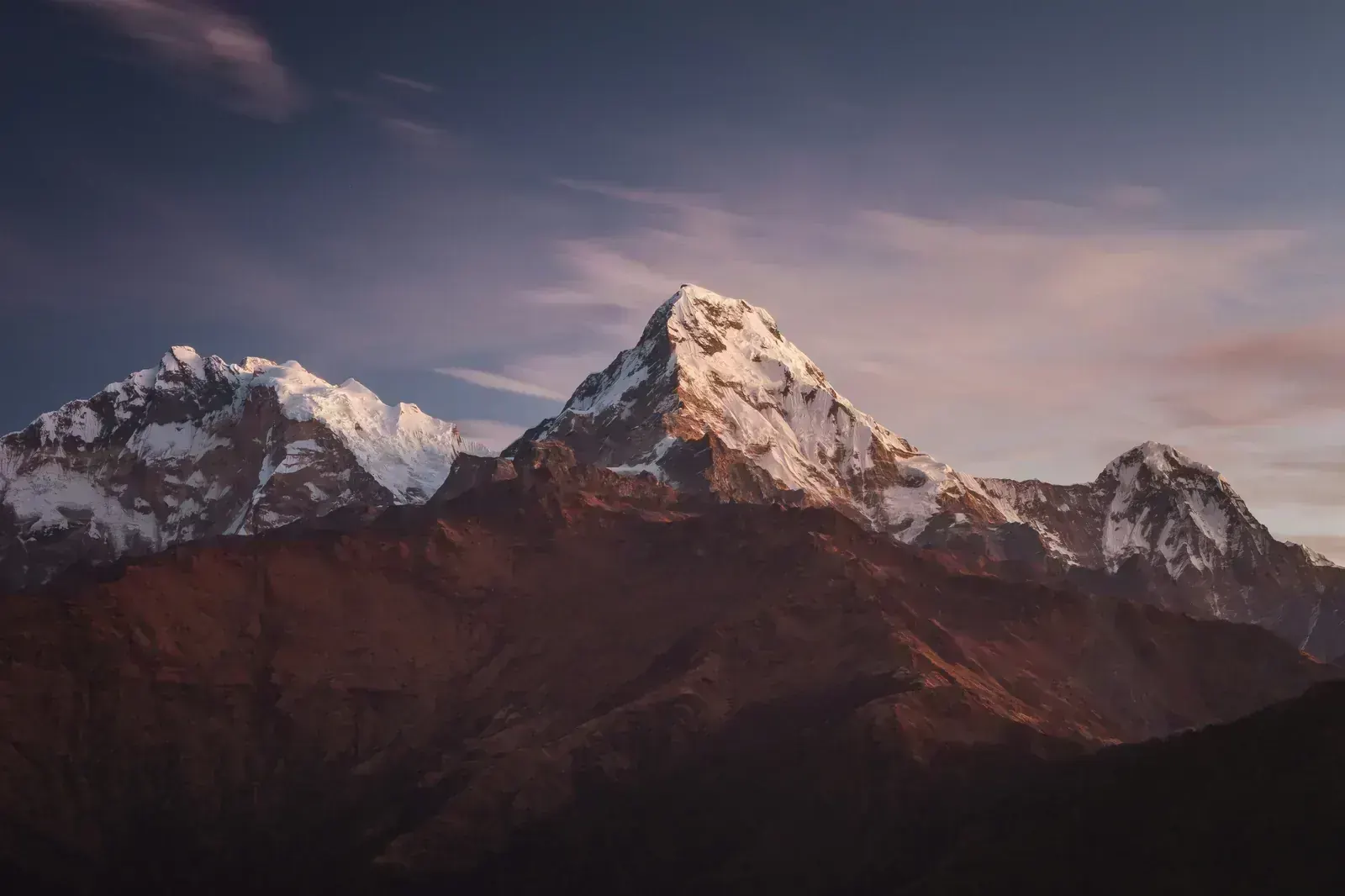
The short, low trek of the Annapurna region: from the road near Pokhara up a long stone staircase to the village of Ghorepani, then a pre-dawn climb to the Poon Hill viewpoint at 3,210 m for sunrise on Dhaulagiri and the Annapurnas. You never sleep higher than about 2,880 m, so the altitude is mild, and the trek is popular with first-timers and families. Here is what to expect, from the Ulleri steps to the cold sunrise on the hill.
- High point
- 3,210 m · Poon Hill
- Duration
- 3–5 days
- Best months
- Mar–Apr, Oct–Nov
- Difficulty
- Easy, non-technical
- Guide
- Not required
- Typical cost
- $180–365estimate per person
For guidance only. Check details with your operator and the official sources listed at the end before you book.
Where to book and compare Ghorepani–Poon Hill trips
Booking sites · affiliate linksEach site lists trips from several operators. Compare dates, group sizes, what is included and reviews there; we don't rank operators.
We earn a commission if you book through these links, at no extra cost to you. Prices and availability are on each site.
On this page
Which route should you choose?
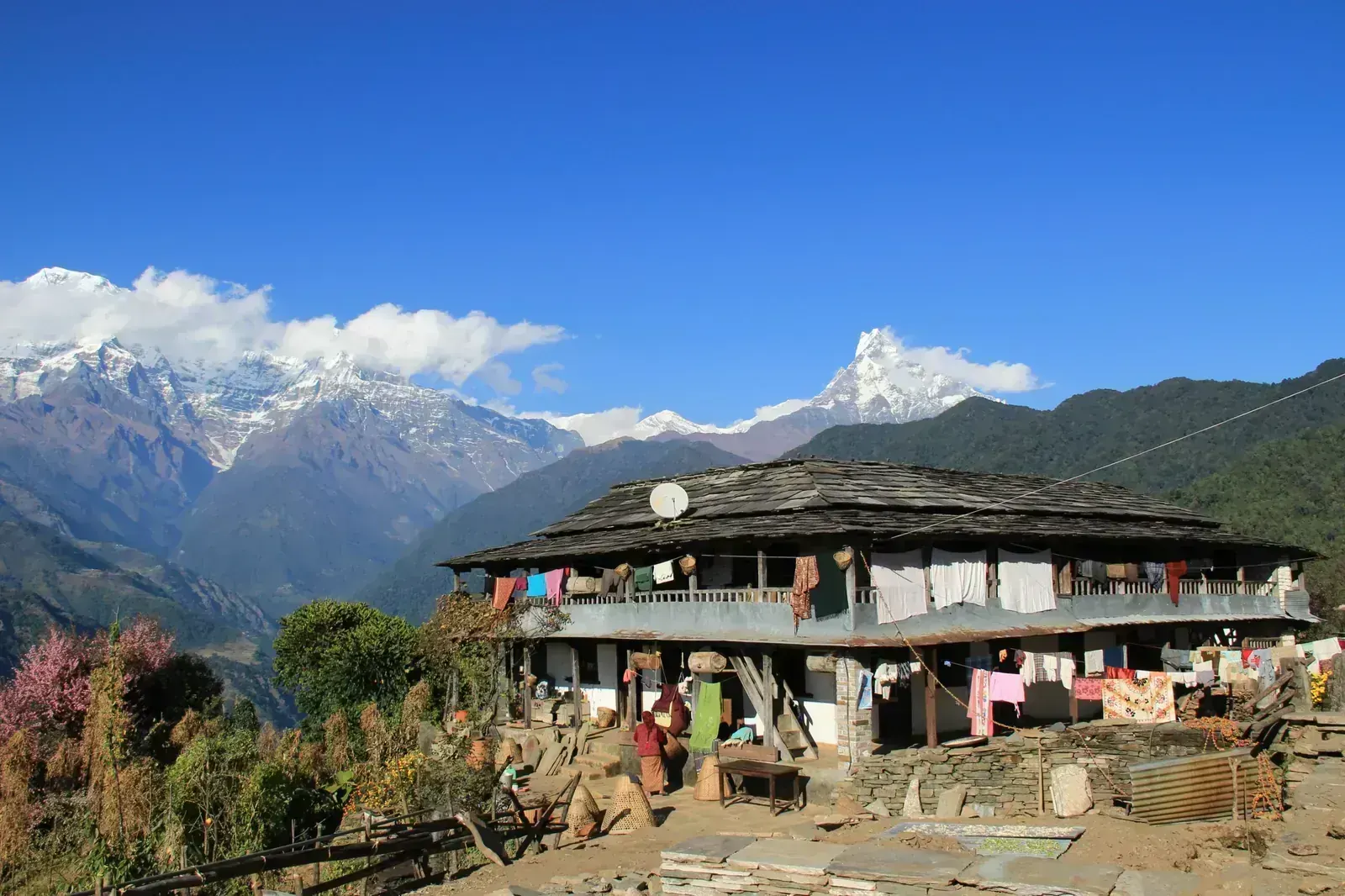
Most trekkers walk a loop from the road near Pokhara: up to Ghorepani for the Poon Hill sunrise, across to Tadapani and down to Ghandruk, where jeeps wait for the drive back. The variants change the length: a jeep can take you most of the way up for a two- or three-day trip, the trail can continue to Annapurna Base Camp, and the Mohare Danda ridge offers a quieter way in.
The trail is well marked, mostly on stone steps and forest paths, with teahouses in every village. Expect company in March, April, October and November, and domestic visitors on weekends in the rhododendron season.
| Route | Days | Scenery | Crowds | Acclimatisation |
|---|---|---|---|---|
| Classic loop via Ghorepani and Ghandruk itinerary belowNayapul or Tikhedhunga up the Ulleri steps to Ghorepani, sunrise on Poon Hill, then through the forest to Tadapani and down to the Gurung village of Ghandruk. Days counted from Pokhara, with the drives to and from the trailhead. | 4–5 | Excellent | High | Very good |
| Short jeep-assisted versionA jeep from Pokhara to Ulleri or further up, Poon Hill at sunrise, then out the same way or by jeep from Ghandruk. Days counted from Pokhara; two-day versions are also sold. | 2–3 | Excellent | High | Very good |
| Extension to Annapurna Base CampFrom Tadapani on to Chhomrong and up the Modi Khola gorge to Annapurna Base Camp at 4,130 m, well above the rest of the trek. About eight days on foot from Pokhara; packages counted from Kathmandu run to ten. | 8–10 | Excellent | High | Good |
| Mohare Danda community trailA quieter ridge to the west with community-run eco-lodges, via Banskharka and Nagi to Mohare Danda (about 3,300 m). It can be linked to Ghorepani in a day of about 5–6 hours. Days counted from Pokhara. | 5 | Very good | Low | Very good |
4-day Classic loop via Ghorepani and Ghandruk itinerary at a glance
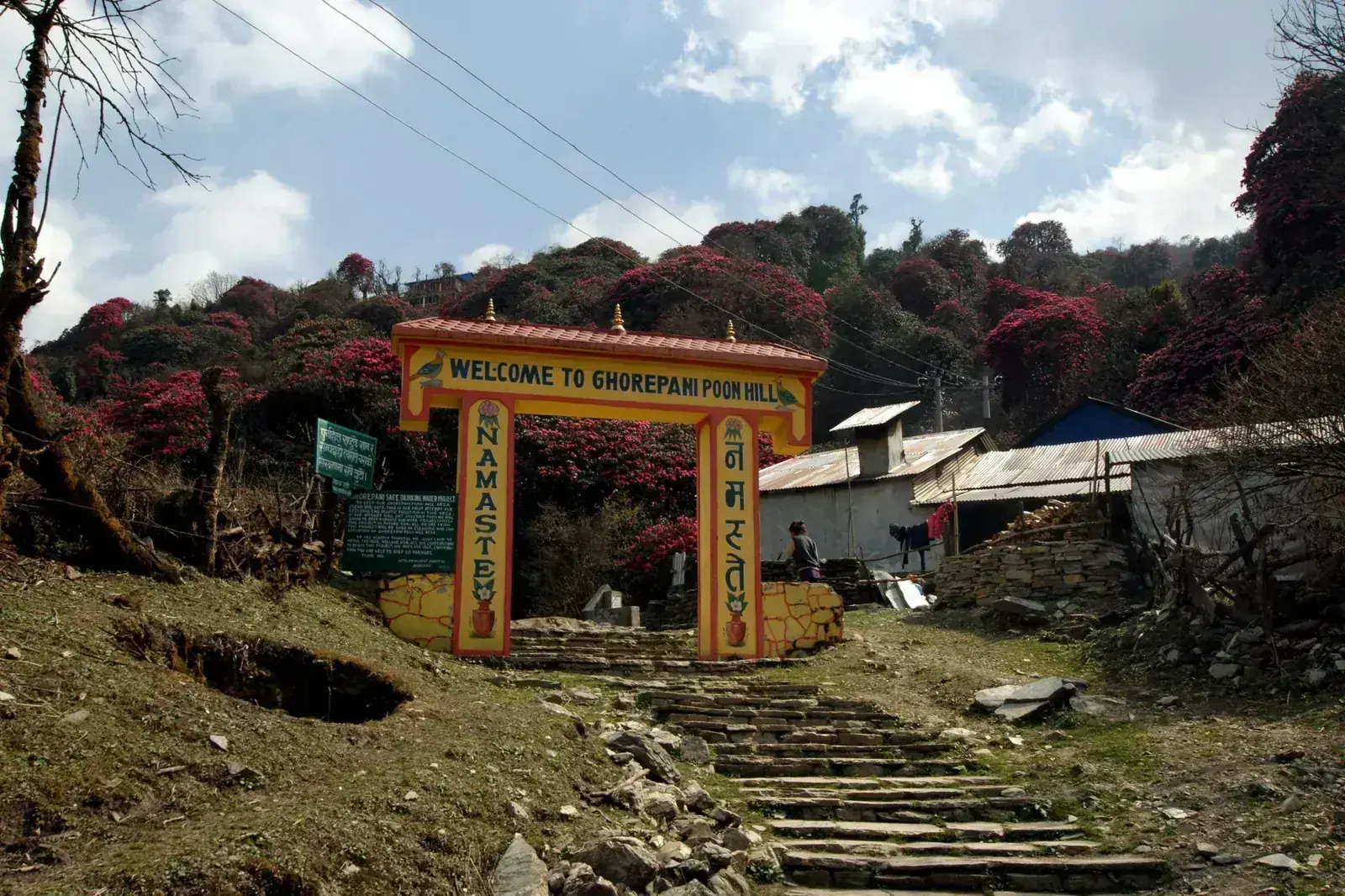
The itinerary below is the common four days from Pokhara, walked clockwise. Day 1 is a drive of about 90–120 minutes to Nayapul and an easy walk to Tikhedhunga. Day 2 is the hard one: thousands of stone steps up to Ulleri, then forest to Ghorepani, 5–7 hours in all. Day 3 starts around half past four in the morning with the climb of Poon Hill in the dark, about 45 minutes of stairs, then breakfast and the walk over Deurali pass (about 3,090 m) to Tadapani, mostly level or downhill. Day 4 descends to Ghandruk and the jeep road.
Short on time? From Pokhara, the Sarangkot viewpoint (about 1,610 m) is a hike of about three hours from the north end of Phewa Lake. Or drive about 45 minutes to Dhampus and walk about two hours up to Australian Camp; ask whether an ACAP permit is needed.
- Day 1 Nayapul (drive from Pokhara) Tikhedhunga night at 1,480 m
- Day 2 Ghorepani night at 2,874 m
- Day 3 Tadapani via Poon Hill 3,210 mnight at 2,630 m
- Day 4 Ghandruk, then drive to Pokhara night at 1,940 m
What it really costs
Package prices depend on group size, the number of days and how much of the route is driven, so compare them on the booking sites. These are the costs to plan around if you build the trek yourself or check what a package includes.
Insurance that covers Ghorepani–Poon Hill
The highest point is 3,210 m and you sleep no higher than about 2,880 m, so standard trekking cover to 3,500 m is enough. Check that it includes trekking in Nepal, medical treatment and evacuation from the trail, and that it covers children if they travel with you.
Keep your policy number and the insurer's emergency line on paper as well as on your phone.
Staying connected in Nepal
Nepal Telecom (NTC) and Ncell are the two mobile networks. An eSIM installed before you fly works on landing; local SIM cards are sold at the airport with your passport and a photo.
On the trail, most teahouses offer wifi: some include it, others charge about NPR 200–500 per device a day. It is often slow; download offline maps in Pokhara.
Getting there and where to stay
Fly into Pokhara International Airport (PHH), the base town for the trek, or into Tribhuvan International Airport (KTM) in Kathmandu and continue to Pokhara: a flight of 25–30 minutes, or about 200 km by road on the Prithvi Highway, 6–8 hours by tourist bus. The highway was damaged in the 2026 floods; check conditions before you travel by road.
Getting there by air
A night in Pokhara
Pokhara to the trailhead
Gear: rent or buy
Nothing technical, but the sunrise is cold: at dawn on Poon Hill it can be −5 °C or lower from December to February, colder in the wind. Pack for warm days on the steps and freezing mornings; down jackets and sleeping bags can be rented in Pokhara.
- Broken-in walking boots or trail shoes with good gripBuy
- Trekking poles for the steps downRent or buy
- Down jacket for the sunriseRent
- Sleeping bag for the colder monthsRent
- Fleece mid-layer and thermal base layersRent or buy
- Warm hat and glovesBuy
- Headlamp for the pre-dawn climb of Poon HillBuy
- Rain jacket and pack coverBuy
- Water bottle and purification tablets or a filterBuy
- Microspikes in January and February, for icy stepsRent or buy
Add a few days in Nepal
Pokhara, the base town for the trek, sits on Phewa Lake below the Annapurna range; a spare day before or after the walk is enough for its lake and viewpoints.
Phewa Lake
World Peace Pagoda
Sarangkot
Frequently asked questions
How hard is the Poon Hill trek?
It is a short walk at low altitude, but not flat. Expect about 35 km to 55 km over three to five days, depending on how much you drive, with a gain of about 1,730 m on the classic loop. The hard part is the long stone staircase to Ulleri on day 2: thousands of steps and 5–7 hours to Ghorepani. Regular walkers in good health manage it at their own pace.
Is it suitable for families with children?
It is one of the treks most often suggested for families: the highest point is 3,210 m and nights stay below about 2,880 m. The steps are the main effort for children, and days of 5–7 hours are long for young legs; some operators take children from about age 7 on jeep-supported plans that shorten the walking. The ACAP permit is free for children under 10. Ask your operator about pace, rest days and porters for children's bags.
Do I need a guide?
Since April 2023, Nepal's rules say foreign trekkers in conservation areas must have a licensed guide. In practice enforcement on this trail has varied, and many trekkers have walked it independently. On 27 September 2026, after the floods, ACAP urged trekkers to travel with licensed guides except on short routes, and named Ghandruk among the places where a guide is not needed; it did not mention Poon Hill. Check the current rule with ACAP in Pokhara or your operator before you go.
Which permits do I need?
The Annapurna Conservation Area (ACAP) permit, NPR 3,000 for foreigners, bought in Kathmandu or Pokhara or online; it costs double if you buy it at a check-post. Ask your operator whether a TIMS card is currently required; reports differ. A small fee is also charged at the Poon Hill viewpoint. Fees are paid in rupees.
What about food, dietary needs and faith on the trek?
Vegetarian dal bhat (rice, lentils and vegetables) is the staple in every teahouse, with noodles, eggs and bread, so eating vegetarian is easy. Do not expect halal meat on the trail. Lakeside in Pokhara has restaurants that serve halal food; confirm how the meat is sourced when you order. If you need halal or vegan food or have an allergy, tell your operator when you book and bring snacks for your diet for the trail. Kosher food is not something to expect on the trail; bring your own if you need it.
If you pray, use your room or a quiet corner and agree times with your guide. There are no mosques on the route. A light prayer mat and a qibla app help if you need them.
Which languages do guides speak?
Most guides speak English and Nepali. If you need another language, such as Arabic, French or Spanish, ask operators before booking whether they can assign a guide who speaks it. A private trek gives you the most say in who walks with you.
Should I tip the guide and porter?
Yes, tipping at the end of the trek is customary in Nepal and a real part of guides' and porters' income. Sources suggest roughly 10% to 20% of their wages, in cash. Ask your operator what is usual for your group.
Which visa do I need?
It depends on your passport: check the current rules with Nepal's Department of Immigration before you fly. A tourist visa on arrival costs $30 for 15 days, $50 for 30 days or $125 for 90 days. Citizens of Saudi Arabia, the UAE, Qatar, Kuwait, Bahrain and Oman, for example, can get one; holders of some other passports, such as Syrian or Afghan, must apply at an embassy first. For this trek 15 days is usually enough.
Can I get altitude sickness?
The risk is low: Poon Hill is 3,210 m and the highest night is about 2,880 m at Ghorepani. You may feel short of breath on the final climb. Still, tell your guide about headaches, nausea or dizziness, and go down if they get worse. If you extend to Annapurna Base Camp at 4,130 m, read our altitude sickness guide first.
Is there wifi or phone signal?
Most teahouses offer wifi, sometimes free, sometimes for about NPR 200–500 per device a day, and it is often slow. Charging phones also costs a few hundred rupees per device in some lodges, so a power bank helps.
When is the best time to go?
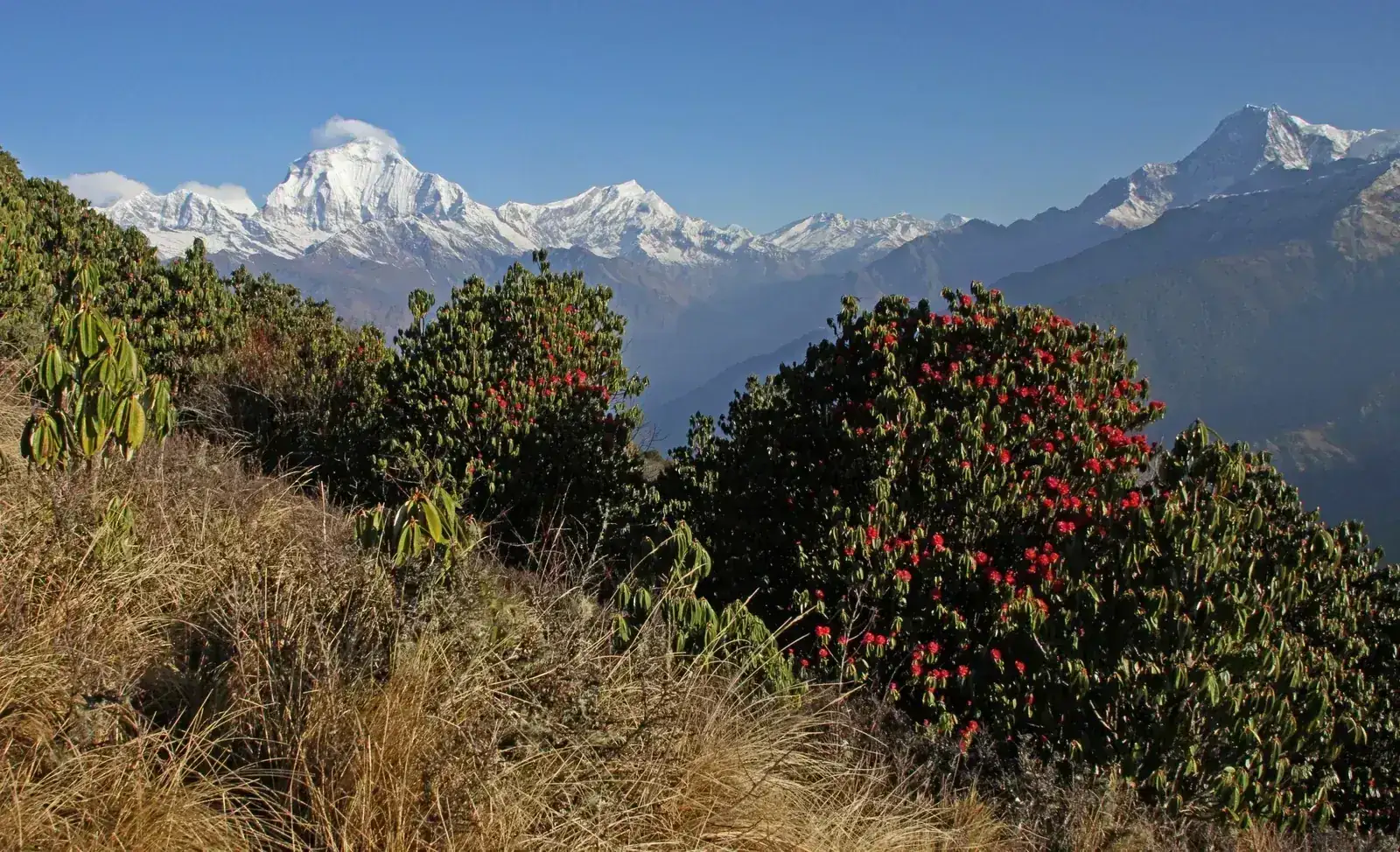
October and November for the clearest views; March and April for the rhododendrons in flower. Winter is possible, with clear days, nights below freezing and icy steps in the morning. The monsoon, from June to August, hides the mountains and brings landslides on the access roads.
Sources and last check
- Wikipedia: Poon Hill
- NTNC: ACAP e-permit fees and rules
- OnlineKhabar: ACAP urges trekkers to hire licensed guides (September 2026)
- Al Jazeera: Nepal's licensed-guide rule (March 2023)
- OnlineKhabar: flydubai starts Dubai–Pokhara flights (September 2026)
- Ratopati: Pokhara–Dubai bookings open (October 2026)
- Ratopati: rhododendron season and roads at Ghorepani (March 2026)
- The Longest Way Home: Ghorepani–Poon Hill trek (updated September 2026)
- 10Adventures: Poon Hill trek guide (August 2026)
- Mosaic Adventure: Poon Hill in January and February (February 2026)
- Embassy of Nepal: visa information and fees
- CDC Yellow Book: high-altitude travel and altitude illness